TRANSLATION MENU: LOOK UPPER RIGHT BELOW THE SOCIAL MEDIA ICONS.
IT OFFERS EVERY LANGUAGE AVAILABLE AROUND THE WORLD!
ALSO, SOCIAL MEDIA AND PRINT ICONS ARE AT THE BOTTOM OF THIS POST!
Seventeen years on the streets, living and working with the people of China, Jeff
For donations, print books, ebooks and audiobooks, please see at the bottom of this post
My introduction
Since the Chinese agricultural and lunar calendars intersect differently every year (within a range of month or so), this year Zhonghe Festival (中和节 = Zhonghejie) and Spring Equinox fall on the same day – March 20.
Both are celebrated and the two are very important milestones for Chinese farmers.
Here are the excerpts from my Chinese calendar article concerning Zhonghe and Spring Equinox. Zhonghe is also known as Longtaitou, all explained below. The next two weeks are known as Chunfen, one of the 24 fifteen-day agricultural periods farmers live by.
Excerpt on Zhonghe = Longtaitou
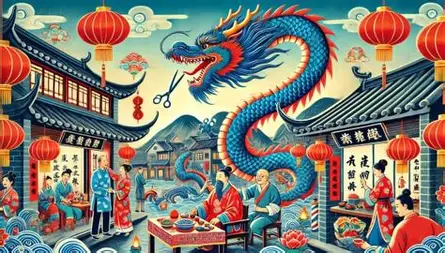
Dragon Raises Head Festival (Longtaitou = 龙抬头) is on the second day of the second lunar month of the year, it can move earlier or later. As well, it is also called by its traditional date, 2-2 (Eryue’er = 二月二). This is an ancient agricultural celebration in harmony with the weather cycle. The dragon has always been considered the king of all the animals and giver of rain. Thus, by raising its head to the skies, it will usher in spring rains. Prayers are made to the Dragon King.
Like many festivals in China, spring pancakes and noodles are eaten. Since the weather is warming up, women used to wear sachets of fragrant ingredients, as an insect repellent, and even today, as a wish for good luck. Back in the day, women were not supposed to sew on 2-2, so that the needles would not poke out the Dragon King’s eyes. This, while the family would spread ashes on the ground around the home, then on the house floors and around the big pickling or vinegar jar, as a symbolic way to ask the dragon to bring plentiful rains for planting.
For the men of the house, the big ritual still widely followed is to go get a 2-2 haircut. On this day, barbershops will open at four in the morning and not close until late at night. Grandpas and grandsons will stand in line for hours, to wait their turn. It is not unusual for a single barber to give 500 haircuts on Longtaitou. The weather is getting nicer and it’s time to spiff up for those after dinner and weekend strolls around town and in the public parks.
In some parts of China, 2-2 is still celebrated as the first day of the Taihao Temple Fair (Taihao Miaohui = 太昊庙会). This ancient temple fair is to honor the sister-brother deities Nvwa (女娲) and Fuxi (伏羲), and it lasts until the third day of the third month. This goddess and god are in the thick of Chinese creation lore, being credited with creating humanity, cooking, fishing, hunting and the Chinese writing system we still use today. Quite the Dynamic Duo. Back off Batman and Robin!
During the springtime, there is a lunar festival called Dragon Raising Head (Longtaitou = 龙抬头), which falls on the second day of the second month, which is late February or March, depending on the year. Lots of different activities include getting a haircut, roasting beans or melon seeds and making popcorn. Longtaitou is a celebration of cranking up agricultural work needs. No more excuses. Time to get after it.
Excerpt on Chunfen (春分)
This year, Spring Equinox is on March 20st (春分 = Chunfen). This is the day when the Sun is perfectly perpendicular over Earth’s equator, because the plane of the Equator aligns with the plane of the Earth’s orbit around the Sun. Everywhere in world, even at the North and South Poles, it is exactly 12 hours of day and 12 hours of night, give or take a few minutes. This slight discrepancy is due to Earth’s precession, since the rotation on its polar axis has been and continues to slow down for the last 3.5 billion years. Watch a slowing, spinning top start to wobble backwards and you will see precession. Equinox means “equal night” in Latin. The Sun is at 0/360 degrees right ascension. Not coincidentally, this is also the start of the Western zodiac, dating back to ancient Greece and Rome. The Ides of March. Springtime.
During the 15 days of Chunfen, the Chinese divide it into three five-day periods, called a hou (侯). People say that swallow birds fly back north during the first , lots of thunder can be heard in the second third and lightning strikes in the final hou. Activities during this solar term include balancing eggs in the vertical position, on a level surface, and if you can pull it off, it will bring good luck. Why now? Because it’s equinox and the Earth is perpendicular to the Sun, naturally. Traditional Beijingers will make a symbolic sacrifice to the Sun god, by offering Old Sol a zhonghe, or sun cake, which is round and yellow, of course. Southerners will feed their farm animals sticky rice balls to thank them for all the upcoming hard labor in the fields,as well as make sacrifices to the birds, to appease them into not eating the grain in the fields, later in the year.
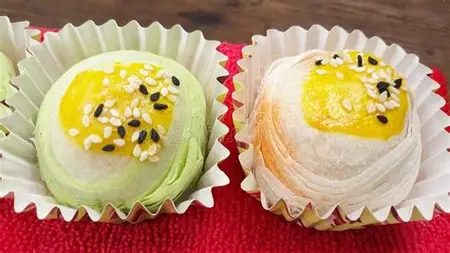
If you want all the poop on Zhonghe, here is a good article I found on the web, which adds some details.
Zhonghe Festival
Zhonghe Festival is a Chinese tradition that has been celebrated for many centuries and this year will be marked on March 20 . This festival takes place on the first day of the second month of the Chinese lunar calendar. This means it falls in February or March according to the Gregorian calendar and depending on the year. The festival, also known as the Blue Dragon Festival, dates back to the Tang and Song Dynasties which reigned during the medieval period of China. It’s a traditional holiday celebrating the first signs of spring and the end of winter, and a sense of agricultural awakening.
History of Zhonghe Festival
The Zhonghe Festival, also known as the Blue Dragon Festival or Longtaitou Festival, is a traditional Chinese agricultural festival. Longtaitou means ‘the dragon raising its head,’ a reference to the beast said to rule over all living things and more significantly, govern the rains.
The Zhonghe Festival traces its origin to the time the Tang and Song Dynasties were in power. The Dragon King, often called the ‘Dragon God,’ is believed to be the god of the elements of water and weather. He can appear in a multitude of ways. He is the god of the east; the essence of spring is represented by the Blue Dragon. The festival commemorates the ritual worship of the Dragon King who is believed to be responsible for spring rains. Farmers celebrate the Zhonghe Festival to anticipate good weather and plowing conditions for a successful harvest season. The Lord of the Soil and the Ground, ‘Tudigong,’ is still worshipped to this day.
Followers of Daoism and Chinese popular religions have always revered this minor deity. ‘Jingzhe,’ the third solar period of the Chinese calendar, falls around the time of the festival. This ‘awakening of insects’ occurs when the land and its hibernating animals are awakened by the first warm hints of spring.
Many of China’s major cities, however, do not celebrate the Zhonghe Festival — it may not even be commemorated in certain hamlets or villages. The places where it is observed follow a variety of traditions. For one, the Dragon God is revered. Those who participate in this festival hope that the Dragon King or God will bring enough rain for a bountiful harvest.
Zhonghe Festival timeline
Fifth Millennium B.C.
The First Dragon Statue is Found
The oldest and the first dragon statue is found during this time period.
618 — 907
The Jade Emperor Wishes for Drought
During the Tang Dynasty, the Jade Emperor, wanting to punish the people, commands the Dragon King to stop the rain for three years to create a drought in the country.
1862 — 1912
The Dragon is Shown on the Flag
The dragon is shown on the Chinese national flag.
1913-1928
The Dragon as a National Emblem
The dragon is shown on the national emblem of the Twelve Symbols.
Zhonghe Festival FAQs
What is the Zhonghe Festival in China?
It’s a holiday closely tied to China’s ancient agrarian culture.
When is the Zhonghe Festival celebrated?
It is celebrated on the first day of the second lunar month to enable farmers to honor the Blue Dragon.
What similar holiday is celebrated in China?
The Dragon Boat Festival is a similar public holiday in mainland China. Also called the Double Fifth Festival, it is celebrated on the fifth day of the fifth month of the Chinese lunar calendar.
Zhonghe Festival Activities
1. Clean the house
Sweep your house without having to fear ‘sweeping’ good luck brought by the Chinese New Year. This custom is believed to welcome new luck and fortune.
2. Enjoy dumplings and pancakes
Eat dumplings, pancakes, noodles, and popcorn. While enjoying these foods, wish for rain and bountiful harvests.
3. Get a haircut
Have your hair trimmed on this day. It is associated with the mythical beast’s pride and power.
5 Interesting Facts About Zhonghe Festival
1. Needlework is a no-no
It is believed that when the dragon rears his head toward the earth, the needles may hurt his eyes.
2. Doing the laundry is forbidden
Doing laundry during the Zhonghe Festival is believed to injure the dragon’s skin.
3. Plant ashes are significant
Plant ashes are traditionally scattered around the home on this day, and when they are stored in an earthen jug, they are said to invite the dragon to bring rain.
4. Longtaitou comes from a Chinese proverb
Longtaitou, which means ‘the dragon raises its head,’ comes from the Chinese proverb, ‘Er Yue er, long tai tou.’
5. Different foods represent the Dragon King’s features
Dumplings represent the dragon’s ears, pancakes represent the scales, noodles represent the beard, and popcorn represents the seeds.
Why We Love Zhonghe Festival
1. It’s a centuries-old tradition
The Zhonghe Festival is a Chinese tradition observed for several centuries. It dates back to the Tang and Song Dynasties.
2. It’s a symbol of hope and prosperity
Farmers commemorate the Blue Dragon Festival to ensure adequate rainfall and plowing conditions for a successful harvest season. It is also associated with good weather.
3. It celebrates the Dragon King
He is revered as both a rainmaker and a zoomorphic emblem of the generation’s young masculine force. In Chinese culture, he is the combined personification of the old notion of the lóng and is hence loved by all.
Zhonghe Festival dates
| Year | Date | Day |
| 2026 | March 20 | Friday |
| 2027 | March 9 | Tuesday |
| 2028 | February 26 | Saturday |
| 2029 | March 16 | Friday |
| 2030 | March 5 | Tuesday |
Go Russia GO!
Go Iran GO!
Go China GO!
Go DPRK GO!
Go “RICK”! Go Asian Quad!
KICK JUDEO-TALMUD-TANAKH ASS!!!
Support, donations and contributions for my work here, any amount, one time or monthly,
A to Z support. Thank you in advance, Jeff
Checks or cash: mail to: Jeff J. Brown, 7 rue du Général de Gaulle, Équeurdreville 50120, France
Donorbox: www.donorbox.com, find China Rising Radio Sinoland
Euro bank wires: 44 Days Publishing, Bank: TransferWise, IBAN: BE70 9672 2959 5225
FundRazr: https://fundrazr.com/CRRS_2021_fundraiser?ref=ab_78aX23
Patreon: https://www.patreon.com/China_Rising_Radio_Sinoland OR https://www.patreon.com/China_Tech_News_Flash
Paypal: https://www.paypal.me/ChinaRisingRadioSino
Stripe US$/ApplePay: https://buy.stripe.com/14k8zl5tp5mVeT66op
Stripe Euros/ApplePay: https://buy.stripe.com/fZe02P8FB9DbcKY28a
US bank wires: Jeff J. Brown, Bank of Oklahoma, Routing Number/ABA: 103900036, Account: 592243855
WeChat and Alipay:

Books by Mike Palecek
“The Truth is Here”
Mike Palecek writes with passion, wit, and always
with a strong social conscience.
— Howard Zinn
https://mikepalecek.substack.com/p/the-neo-con-revolution
Paid Advertisement
Further study
The China Trilogy is an honorary degree in Chinese Studies. Don’t miss out!
https://www.amazon.com/stores/author/B00TX0TDDI/allbooks and
Jeff J. Brown’s libraries and catalogues A-Z: 1,000s of hours of research, writing, editing and podcasting.
Do yourself, your friends, family and colleagues a favor, to make sure all of you are Sino-smart:
Google ebooks (Epub) and audiobooks:
44 Days Backpacking in China: The Middle Kingdom in the 21st Century, with the United States, Europe and the Fate of the World in Its Looking Glass https://play.google.com/store/books/details?id=YBKHEAAAQBAJ
https://play.google.com/store/audiobooks/details?id=AQAAAECCkQXRlM
China Rising: Capitalist Roads, Socialist Destinations https://play.google.com/store/books/details?id=YNmLEAAAQBAJ
https://play.google.com/store/audiobooks/details?id=AQAAAECCfHo86M
BIG Red Book on China: Chinese History, Culture and Revolution
https://play.google.com/store/books/details?id=6Wl4EAAAQBAJ
https://play.google.com/store/audiobooks/details?id=AQAAAECCfHo86M
Amazon print and ebooks (Kindle):
44 Days Backpacking in China: The Middle Kingdom in the 21st Century, with the United States, Europe and the Fate of the World in Its Looking Glass
https://www.amazon.com/gp/product/1484939999/
China Rising: Capitalist Roads, Socialist Destinations
https://www.amazon.com/China-Rising-Capitalist-Socialist-Destinations/dp/0996487042
BIG Red Book on China: Chinese History, Culture and Revolution
https://www.amazon.com/BIG-Red-Book-China/dp/1673322719/
Author page:
https://www.amazon.com/Mr.-Jeff-J.-Brown/e/B00TX0TDDI
Praise for The China Trilogy:
Why and How China works: With a Mirror to Our Own History



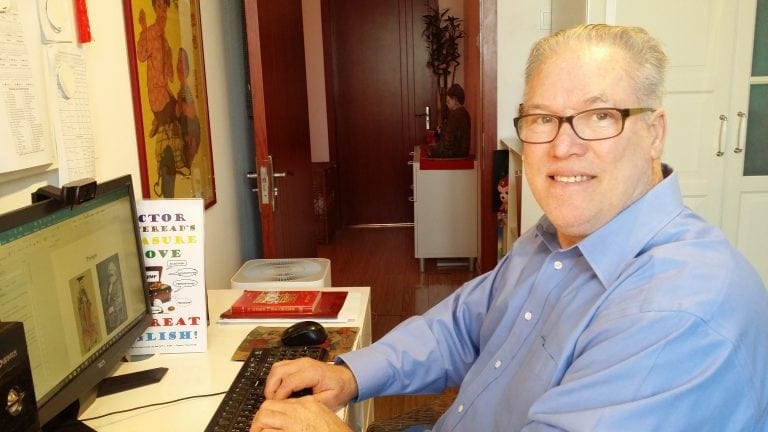
JEFF J. BROWN, Editor, China Rising, and Senior Editor & China Correspondent, Dispatch from Beijing, The Greanville Post
Jeff J. Brown is a geopolitical analyst, journalist, lecturer and the author of The China Trilogy. It consists of 44 Days Backpacking in China – The Middle Kingdom in the 21st Century, with the United States, Europe and the Fate of the World in Its Looking Glass (2013); Punto Press released China Rising – Capitalist Roads, Socialist Destinations (2016); and BIG Red Book on China (2020). As well, he published a textbook, Doctor WriteRead’s Treasure Trove to Great English (2015). Jeff is a Senior Editor & China Correspondent for The Greanville Post, where he keeps a column, Dispatch from Beijing and is a Global Opinion Leader at 21st Century. He also writes a column for The Saker, called the Moscow-Beijing Express. Jeff writes, interviews and podcasts on his own program, China Rising Radio Sinoland, which is also available on YouTube, Stitcher Radio, iTunes, Ivoox and RUvid. Guests have included Ramsey Clark, James Bradley, Moti Nissani, Godfree Roberts, Hiroyuki Hamada, The Saker and many others. [/su_spoiler]
Jeff can be reached at China Rising, [email protected], Facebook, Twitter, Wechat (+86-19806711824/Mr_Professor_Brown, and Line/Telegram/Whatsapp: +33-612458821.
Read it in your language • Lealo en su idioma • Lisez-le dans votre langue • Lies es in deniner Sprache • Прочитайте это на вашем языке • 用你的语言阅读
[google-translator]
Wechat group: search the phone number +8619806711824 or my ID, Mr_Professor_Brown, friend request and ask Jeff to join the China Rising Radio Sinoland Wechat group. He will add you as a member, so you can join in the ongoing discussion.
 I contribute to