Amir&Jeff’s Excellent China Adventure Series. 2026: Xinjiang Province Red Tour. Photos and commentary. The REAL Chinese people you do not know!
Amir&Jeff’s Excellent China Adventure Series. 2025: Hunan, Jiangxi, Fujian and Shaanxi Provinces’ Red Tour. Short videos with transcripts, captioned photos, articles and commentary. The REAL Chinese people you don’t know!
https://radiosinoland.com/2025/07/27/amirjeffs-excellent-china-adventure-series-2025-hunan-jiangxi-fujian-and-shaanxi-provinces-red-tour-short-videos-captioned-photos-articles-and-commentary-the-real-chinese-people-you-don/
Short intro to Xinjiang by Jeff

Xinjiang is huge, 17% of the country’s landmass, 1.66 million square kilometers (China’s total land area = 9.6 million), which is three times the size of France, or bigger than Alaska in North America. It is mostly desert, mountains, basins and high plateaus, with beautiful lakes. Weather is harsh here. When we arrived on 5 August, the temperature was 41 degrees. In the winter, it can drop to minus twenty.
For our one-month Red Tour adventure in Xinjiang, we will get a far west as Aksu and as far south as Korla. It is already starting out as an amazing lunar cycle.
The Uyghur people in China are members of the Turkic language group, of which there are many derivatives, starting in Turkey, of course, and there’s a swath going from there to the east through South Central Asia. They are, at varying degrees, mutually understood, from 0 to maybe 75%, depending on the dialect. For example, Turkish and Uyghur are 30% mutually comprehensible.
So Uyghurs are, in fact, Turkic people.
Xinjiang’s population is 26 million, 58% Muslim. The capital is Urumuqi. It has four million residents. Hami has 670,000 citizens. Shihezi, Karamay, Korla, Yining and Aksu are other cities we are visiting each have about 500,000 souls.
West to east, Xinjiang has common international borders with Pakistan, Tajikistan, Afghanistan, Kyrgyzstan, Kazakhstan, Russia and Mongolia. Internally, it borders the provinces of Gansu, Qinghai and Tibet, north to south. It is now a hugely important nexus in Asia’s Belt and Road Initiative (BRI), connecting the rest of China with the rest of Mackinder’s Heartland. On that note,
Jeff J. Brown comments on Sputnik News- Putin: China’s Belt and Road Initiative ‘in Sync With Russia’s Ideas on Large Eurasian Space’. China Rising Radio Sinoland 231027
Not only industry and commerce, Xinjiang is a massive producer of high value crops, including a huge variety of fruits, vegetables and cotton. We see lush, green fields and orchards stretching kilometer after kilometer, thanks to one of the biggest water canal and irrigation systems in the world, starting in the Altai Mountains, over 400km away. The BRI has made it possible to ship large quantities of this produce all over Asia.
Amir’s comments and photos
Nightlife in Xinjiang
I did not go searching for fun. I frequent night clubs and bars less and less as I get older. Upon our second pass through Urumqi, the only term I entered in the search bar on my trip app was “laundry” and “free cancellation.”
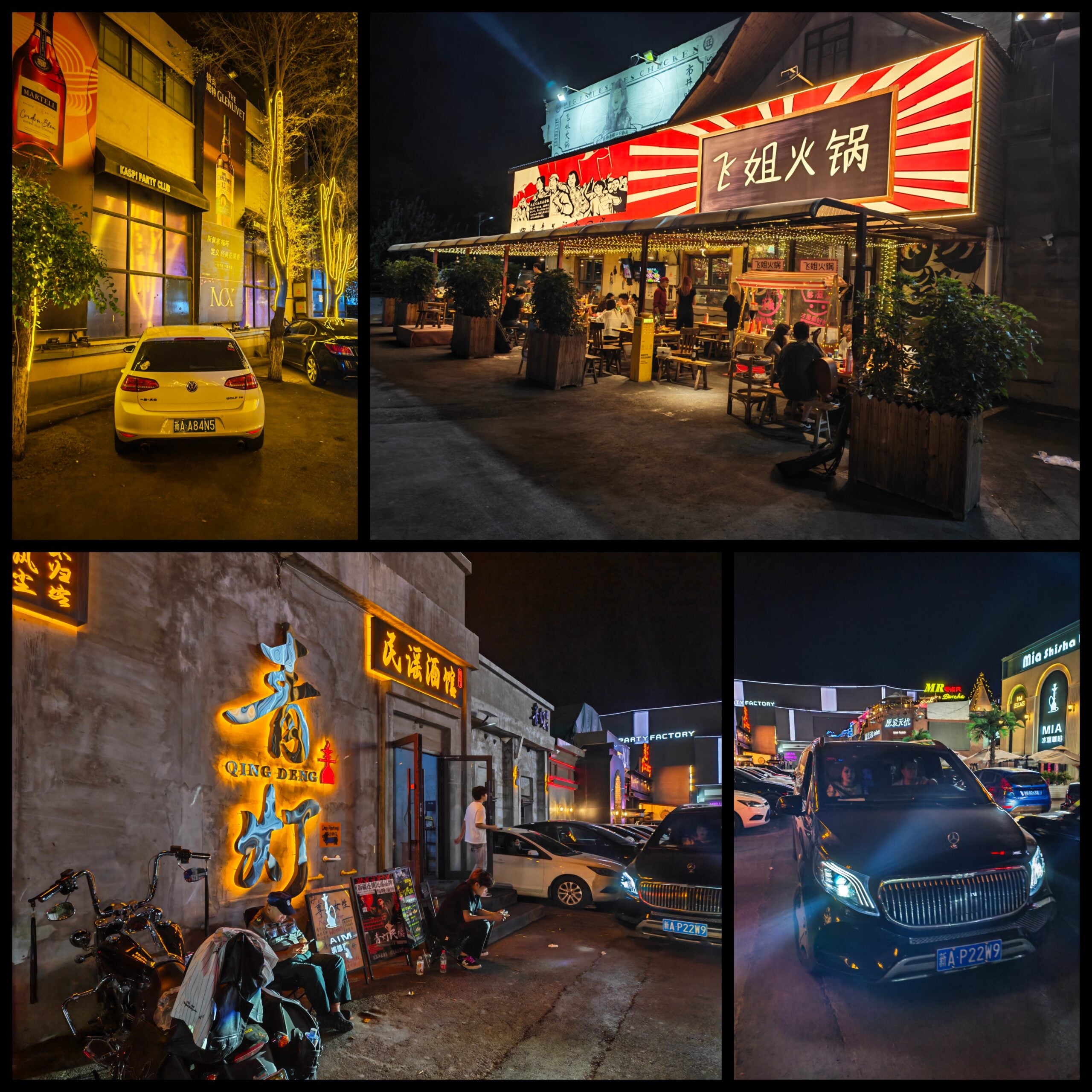
The Lucky Star Hotel (吉运之星宾馆)appeared in a section of town I knew nothing about. But the cab driver informed Jeff and me on our trip from the train station that we were, in fact, staying in a party area, supposedly full of beautiful women and lots of night life.
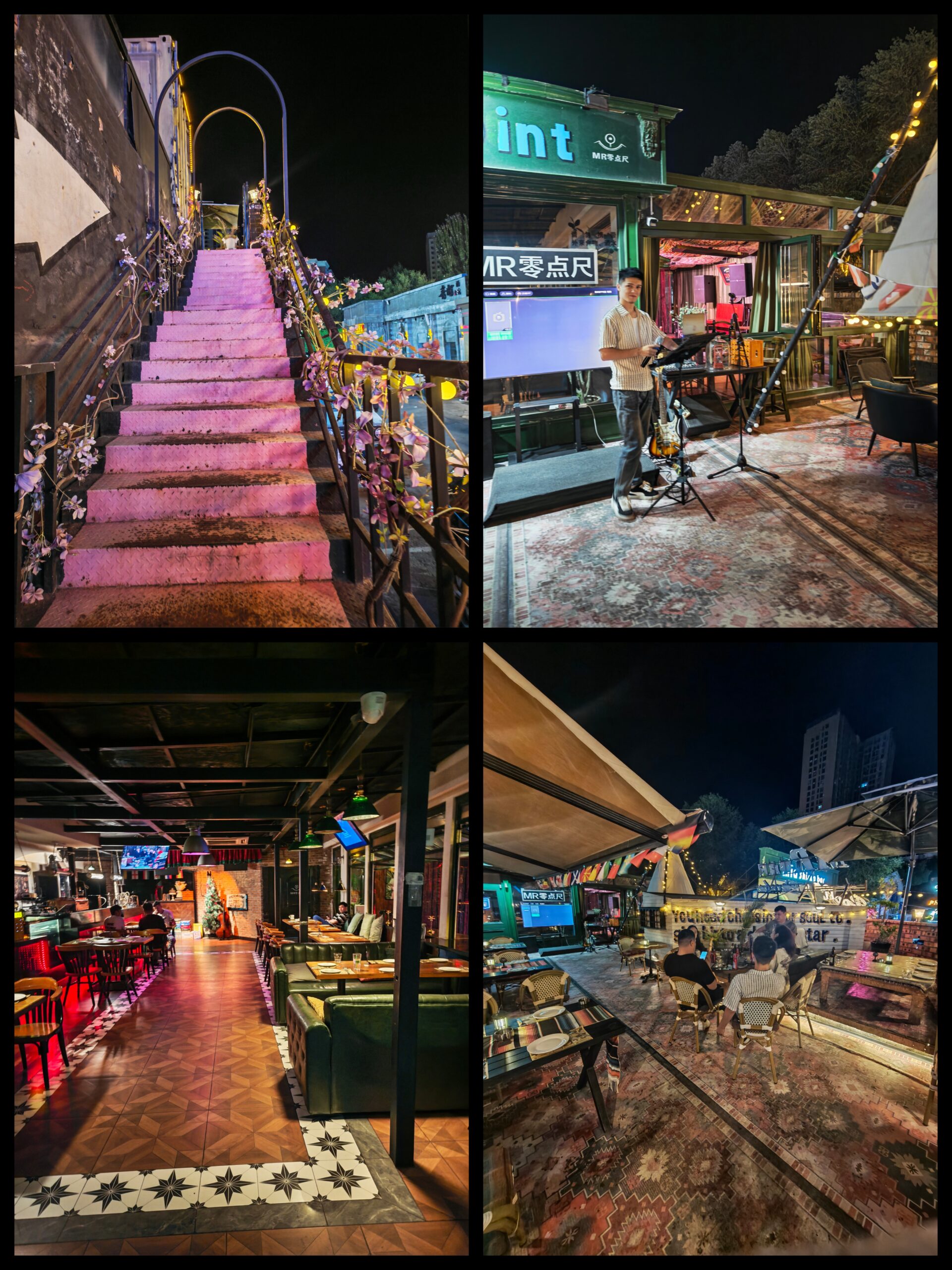
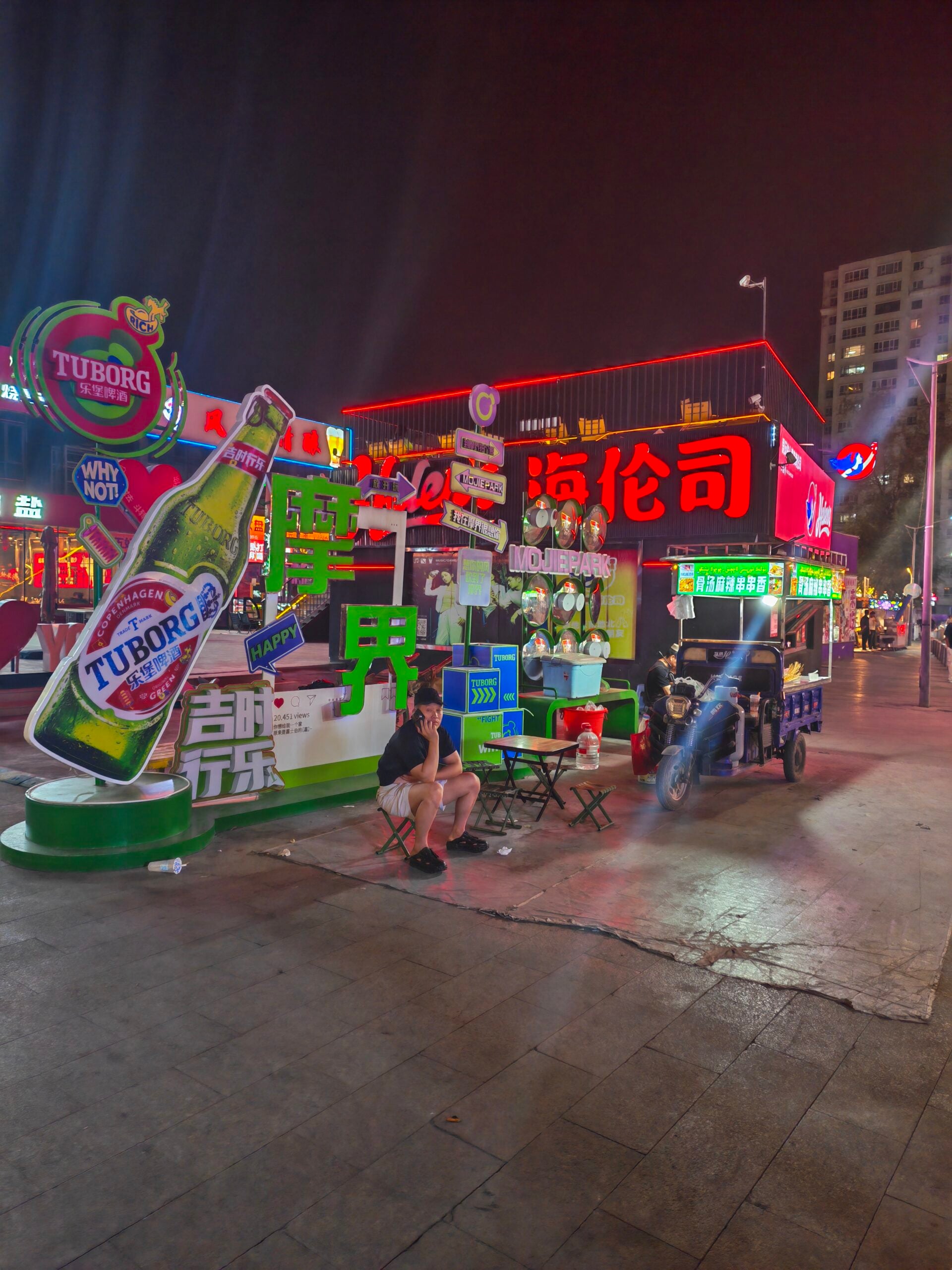
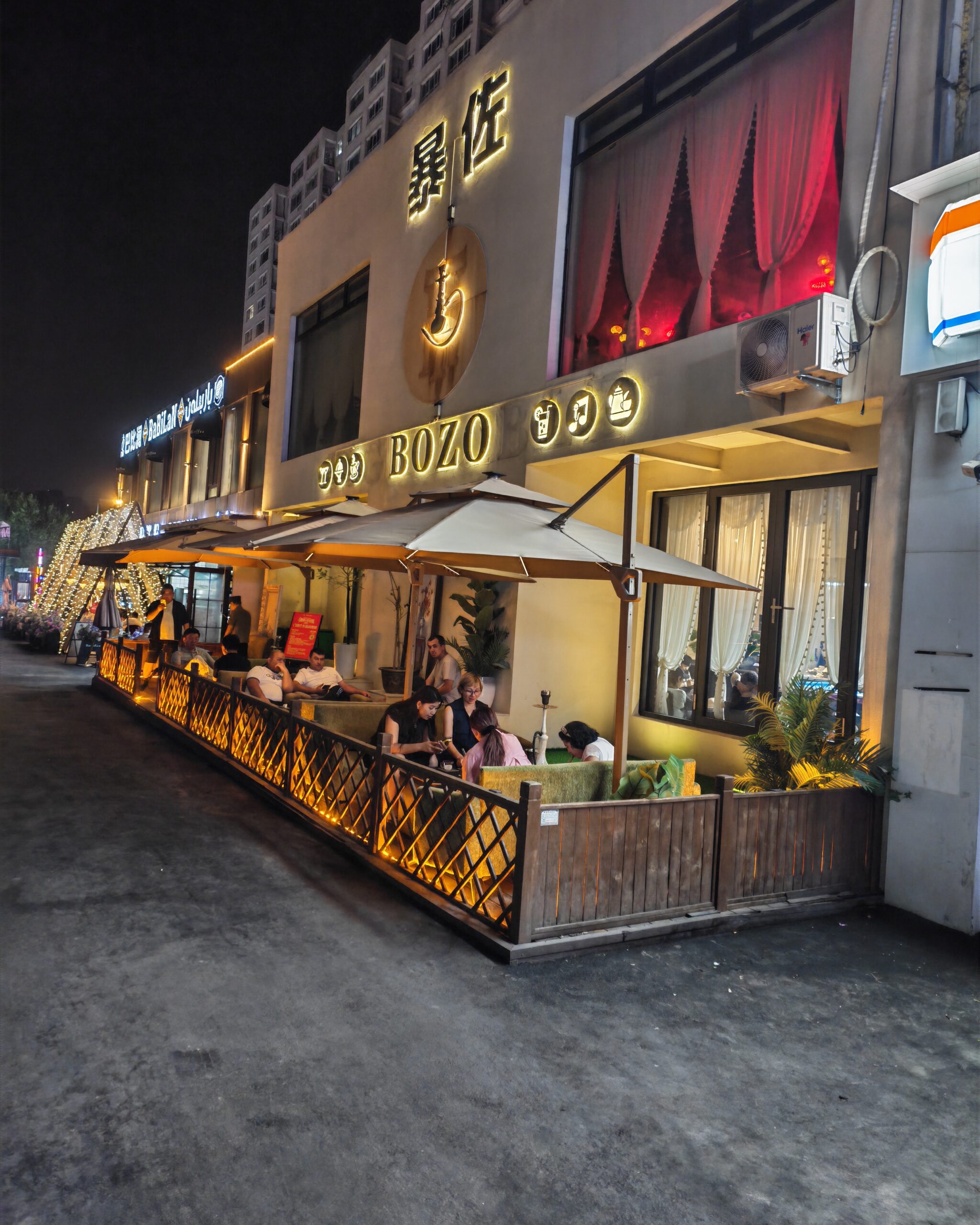
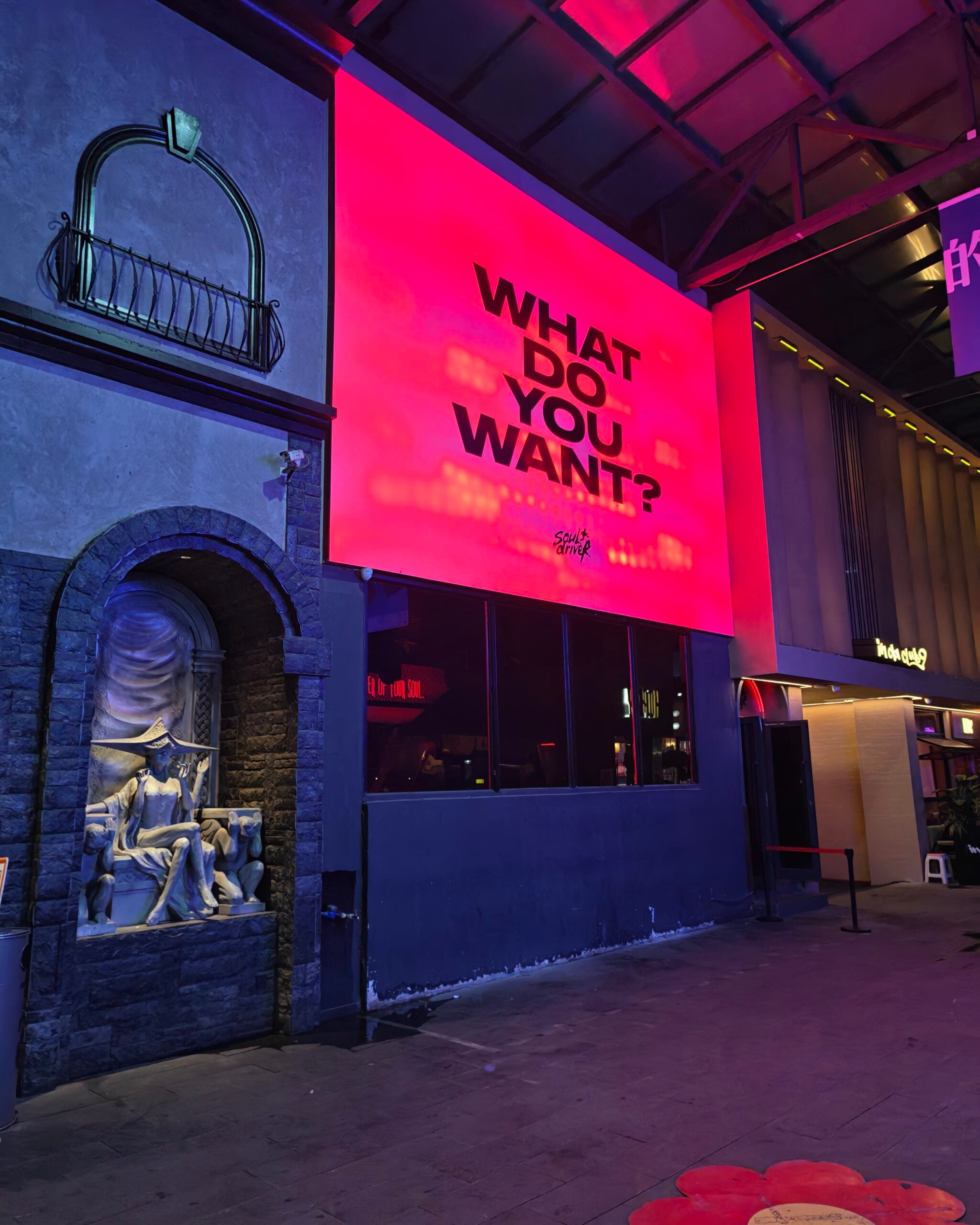
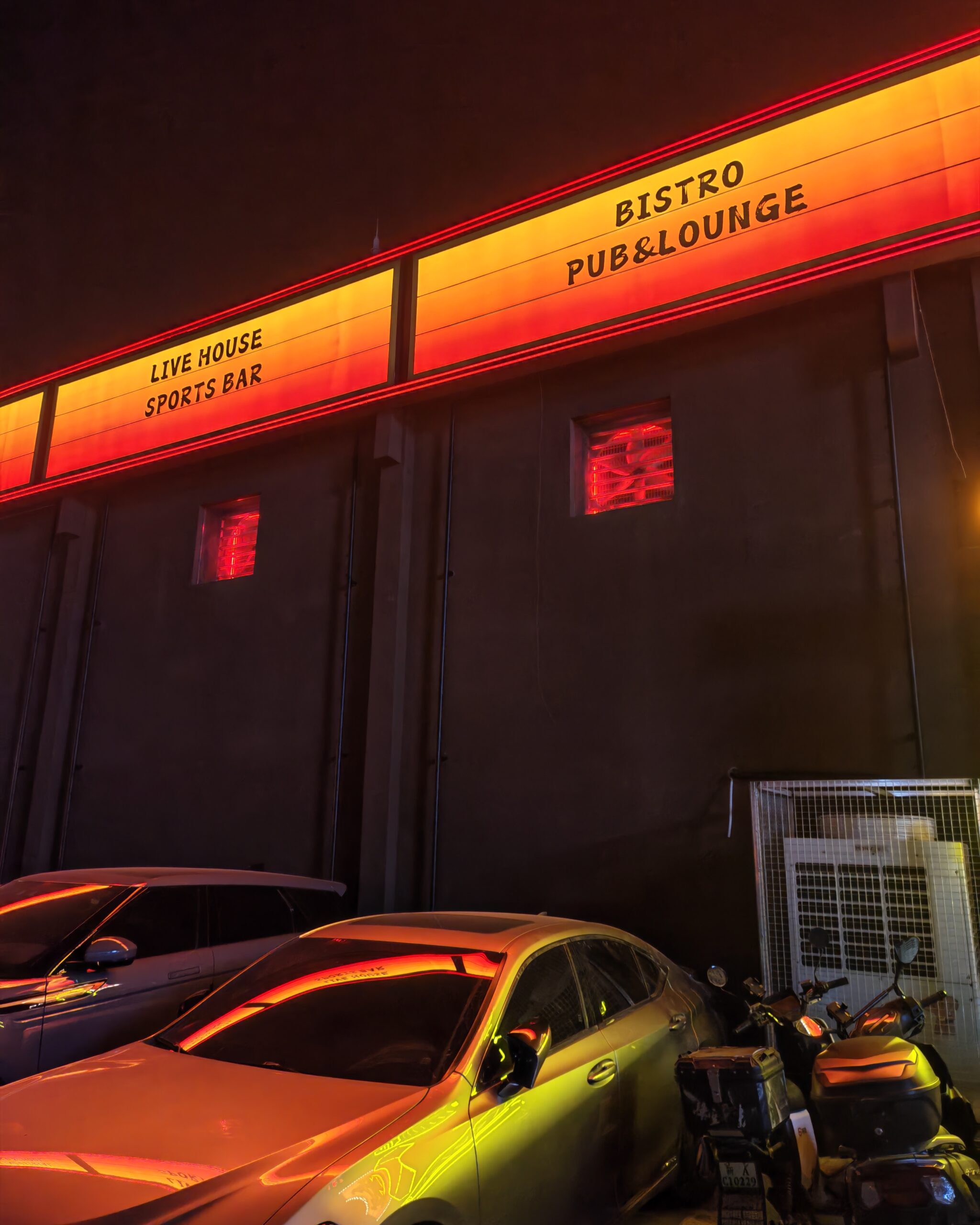
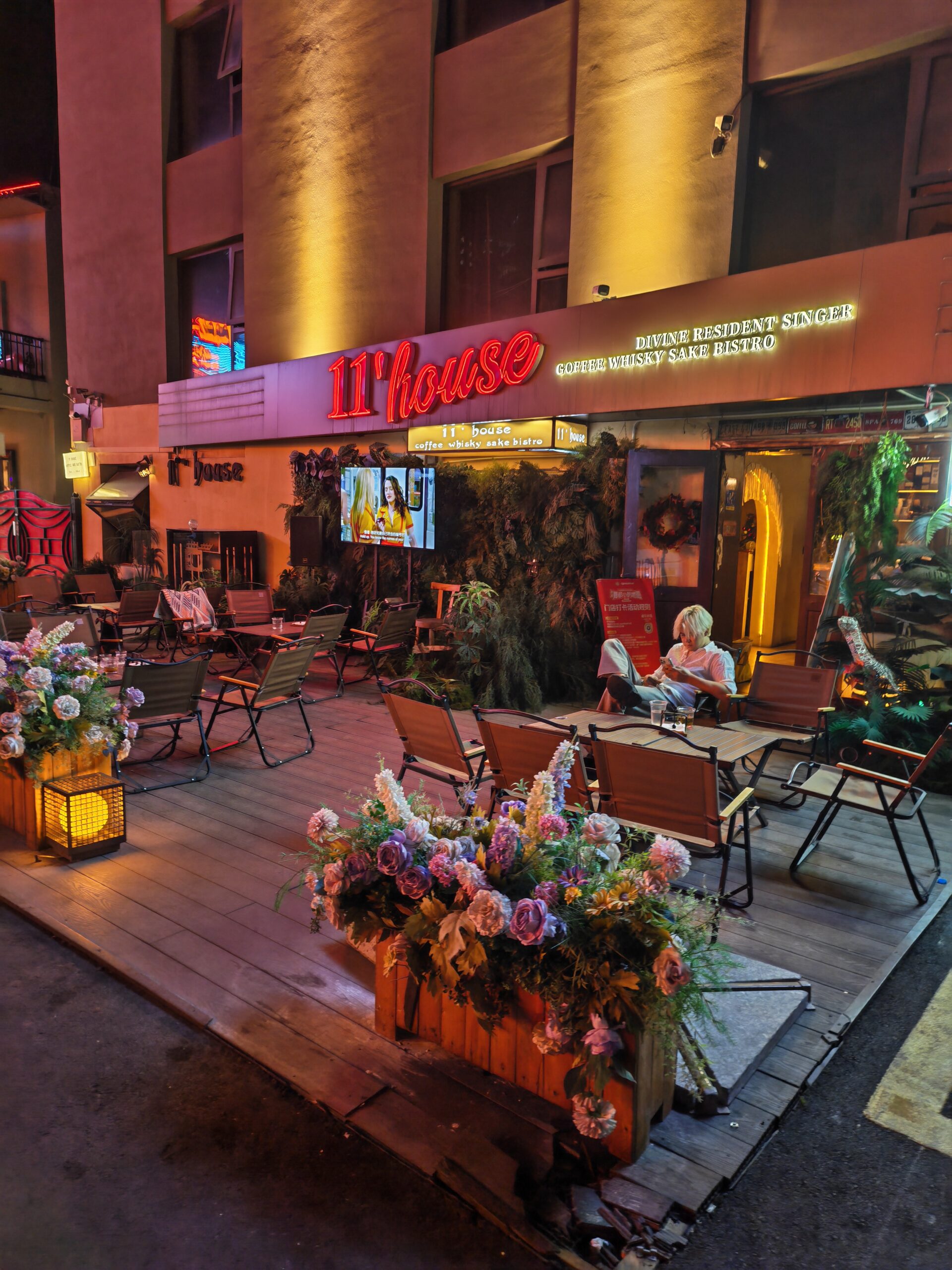
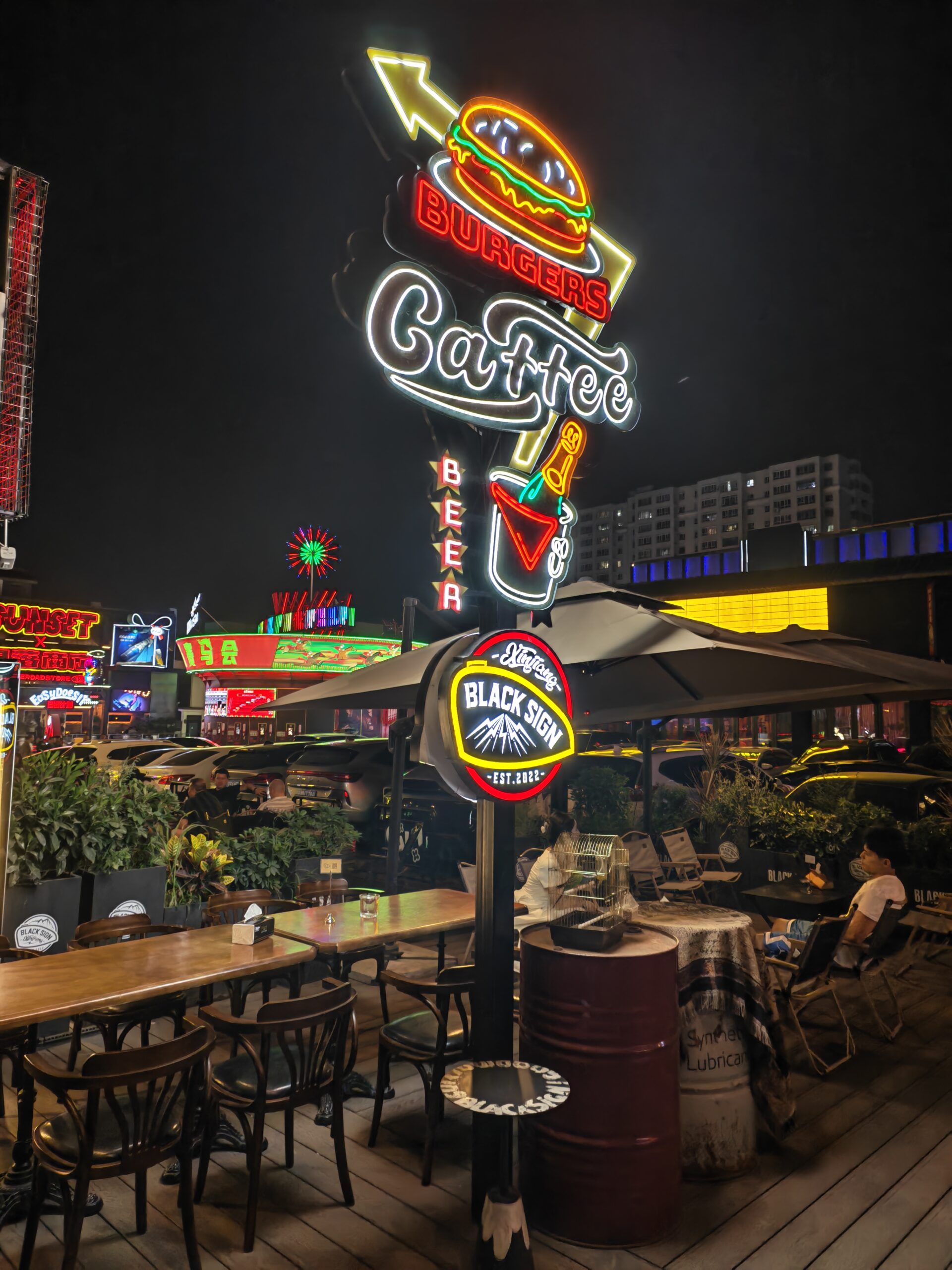
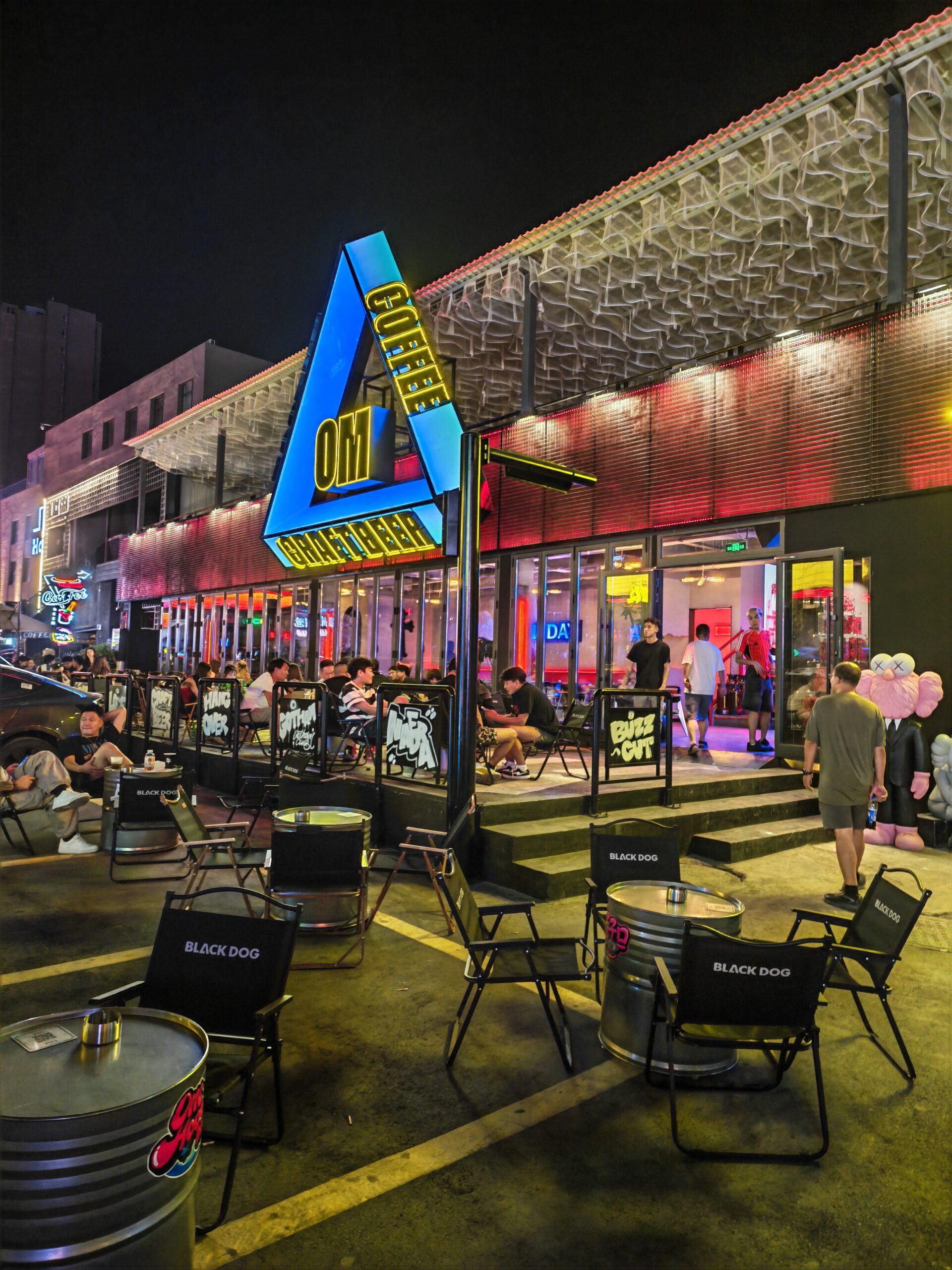
He was correct. Our hotel was sandwiched between two vibrant “club scenes,” one known as Mojie/Magic Cultural-Creative Park on the north side, and the Wujie Yoho Plaza on the south.
Note that neither of these places are in the downtown core area of Urumqi. I visited the south side on a Sunday night, the north on a Monday night—not particularly good nights to evaluate any party atmosphere. Most spots were indeed dead.
But all of it had a very similar feel to Changsha.
Of note also is that people flock to night markets and restaurants rather late in all of Xinjiang. Because China does not practice daylight-savings time, ten o’clock pm in Urumqi is equivalent to seven o’clock pm in Beijing (in terms of daylight).
Our stay on a busy pedestrian street in Shihezi was similar; long after Jeff went to bed did the street really start rocking! I was up at my usual hours (Beijing time or whatever), so could hear from my window the music, street ruckus, vendors, and clanging of steel spatulas against hot woks.
Urumqi is similar, and both are similar to Changsha. Where Changsha stays up and stays out all night, things generally tend to die down after 2am in Shihezi and Urumqi. But in the span of about four hours, I did notice the following:
Nightlife in Urumqi is bifurcated. Uighur clubs and Han clubs are somewhat segregated. I’m drawing from a terribly small sample size mind you, but I’ve noticed this trend even in my sporadic excursions in Los Angeles and Atlanta. Clubs and bars are predominantly either/or. Either black or white. People everywhere perhaps like to party with their own kind.
And just like Changsha, the Han Chinese who were out late tended to sit at tables, drink beer, and listen to live music, with no dance floor in sight. At the Uighur clubs, naturally the music changed to more of a pop-techno-Xinjiang sound that was very amenable to dance! The only place I saw people dance was the Kaspi night club in the Yoho Plaza, where men and women took the dance floor in semi-rehearsed steps with arms out and swirling.









###
 I contribute to