TRANSLATION MENU: LOOK UPPER RIGHT BELOW THE SOCIAL MEDIA ICONS.
IT OFFERS EVERY LANGUAGE AVAILABLE AROUND THE WORLD!
ALSO, SOCIAL MEDIA AND PRINT ICONS ARE AT THE BOTTOM OF THIS POST!
Seventeen years on the streets, living and working with the people of China, Jeff
For donations, print books, ebooks, audiobooks and Jeff’s libraries, please see at the bottom of this post.
Text only.
Introduction
Note before starting: it is no accident that Gorbachev was shuttled to Beijing in 1990, at the height of the Tiananmen Square protests. He and his Chinese equivalent, Zhao Ziyang were two peas in a color revolution pod. Both were Mossad-CIA-MI6 pawns, as well as the duped protesters. Zhao was fired by Deng Xiaoping just in time, to save China’s communist-socialist way of life. Gorbachev, in classical Judeo-Western fashion, was foisted on the world as some kind of freedom loving liberator. In reality, he destroyed his country and his people for filthy lucre.
For the next ten years, Russians were plunged into darkness and hell on earth, starving and freezing to death. All quality of life indicators fell into the abyss of disaster capitalism, while the people and their resources were being sucked dry by a handful of Jewish oligarchs. Of course, all of this is totally expunged the Judeo-Western Big Lie Propaganda Machine.
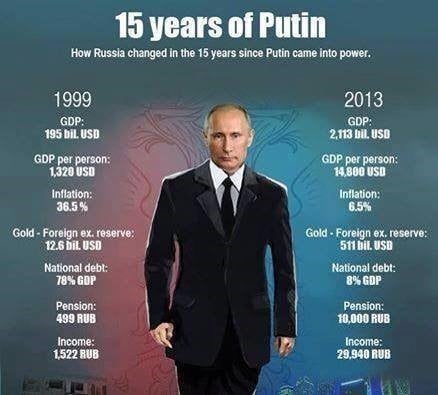
Finally, in 2000, Vladimir Putin took control of this shipwreck and in only ten years, brought down the Judeo-oligarchs and gave back to the people hope, dignity, development and progress. This overview is from 2018, but Russians’ quality of life has only gotten better since then, in spite of all the Judeo-Western sanctions (https://www.sott.net/article/375469-Russian-economy-under-Putin-Quality-of-life-tripled-foreign-debt-fell-75). This graphic is also old, but you get the idea.
As this definitive recount below shows, Gorbachev was nothing more than a common gangster, doing what gangsters do best. Is it no wonder that nationally, he is the most despised leader in Russia’s modern history? Read it and weep.
Gorbachev- Instead of an Obituary
Aleksandr Dudchak
… Foreigners began to buy up Russia for next to nothing …
Gorbachev was never the naive advocate of “change” that he pretended to be. He openly declared: “The goal of my life was the destruction of communism, which is an unbearable dictatorship over the people… I could do this most successfully by performing the highest (state) functions. Therefore, my wife Raisa recommended that I constantly strive for the highest positions. And when I personally got acquainted with the West, my decision became irrevocable. I had to eliminate the entire leadership of the CPSU and the USSR. I also had to remove the leadership in all the socialist countries… for such purposes, I found like-minded people. First of all, it was Yakovlev and Shevardnadze, who have great merits for the overthrow of communism…”
“You can safely celebrate Christmas. The USSR no longer exists” – this famous phrase of Gorbachev was addressed to the American president. In response, Bush assured Gorbachev of his sincere gratitude.
Starting in 1985, Gorbachev systematically created the structures of the “shadow” party economy both in the USSR and abroad by adopting and implementing various decisions of the party and the government. To fulfil the tasks assigned to him, Gorbachev personally determined the list of authorized representatives from among the members of the Central Committee of the CPSU, the Main Directorate of the Central Committee of the CPSU, the leadership of the KGB, the Ministry of Finance and the Central Bank.
As if to solve the issue of urgent reforms of the USSR economy under the leadership of Gorbachev, a new law on state-owned enterprises was adopted in January 1988. According to it, the state was exempted from liability for the obligations of the enterprises. The enterprises also did not meet the obligations of the state. This law brought chaos and disorganization to the economic activities of enterprises.
At the same time, while maintaining a planned economy, the centralized distribution of funds was maintained. Ministries were still required to provide businesses with everything they needed, and businesses, under the new law, could dispose of this property at their discretion.
The country’s economy became a one-way street. Enterprises were given the opportunity to gradually move away from state orders and develop according to their own plan, independently solving regular issues, as well as regarding the ways of selling goods and pricing. But the lack of market infrastructure and intermediary organizations made this path very difficult. Despite the clause in the bankruptcy law, state subsidies did not allow organizations to be completely liquidated, thereby strengthening the vicious circle: inappropriate distribution of funds, “laundering” of the state budget, and mismanagement of the country.
In May 1988, under pressure from Gorbachev, the Supreme Soviet of the USSR adopted the Law “On Cooperation”. Behind the general phrases of numerous articles of this law, their true essence was hidden: enterprises were allowed to create cooperatives with the right to use centralized state resources. But, unlike workshops, and even unlike the enterprises themselves, these cooperatives could, according to the law, independently conduct export operations, create commercial banks, and create their own firms abroad. At the same time, the proceeds in foreign currency were not subject to withdrawal. In the period from 1988 to the beginning of 1989, the Council of Ministers of the USSR adopted decisions that abolished the state monopoly on foreign economic activity, prohibited customs from detaining the cargo of cooperatives, and allowed them to leave the proceeds abroad.
Using his administrative resources, Gorbachev first released enterprises from their obligations to the country, then transferred their assets to the hands of cooperatives and opened wide the borders of the USSR.
In a matter of weeks, cooperatives were registered at most state-owned enterprises, owned by relatives of directors, secretaries of regional committees and members of the CPSU Central Committee. While public funds still provided resources for the production of products to factories and plants, now the directors themselves had the right to dispose of these products. They began to direct these resources to the ownership of “family” cooperatives, and they sent them abroad. Cement and metal, petroleum products and gas, cotton, lumber and mineral fertilizers, rubber and leather – everything that the state sent to enterprises for processing and saturating the domestic market was sent by railway trains abroad through the “green zones” on our borders. Cooperative managers and officials began to accumulate capital in personal accounts abroad.
According to Gorbachev’s plan, at hour “X”, these funds were legally imported back into the country through their banks to buy up their own enterprises.
In 1988-1989, cooperatives formed “by the decision of the party” exported half of the consumer goods produced in the country and the available assets from the USSR. The domestic market collapsed, and there was a shortage of industrial and food products in the country. By order of Gorbachev and Ryzhkov, the Soviet Union’s gold reserves were used to buy food abroad. Gold flowed abroad for the purchase of “foreign” food. Often, under the guise of foreign goods, domestic products purchased on the domestic market were imported. In the ports of Leningrad, Riga or Tallinn, ships were loaded with cheap feed grain, skirted Europe by sea and arrived in Odessa with “imported” food wheat for the USSR at a price of $120 per ton. In 1989 alone, 2,750 kg of gold was exported from Magadan to buy corn seeds from the United States and Canada. The route of transportation of gold ran through Tatarstan, and then it was sent to Israel along with diamonds worth $28 million.
On February 13, 1990, Gorbachev issued a directive “On the need to consider certain legal aspects of the party’s life in connection with the results of the February (1990) plenum of the CPSU Central Committee”. This directive refers to the need to move to a multi-party system in the USSR and the possibility of withdrawing from the party its property, primarily buildings provided to party committees, other organizations and institutions of the CPSU: publishing houses, printing houses, rest homes, sanatoriums and other social facilities, vehicles, etc.
A top secret order of Gorbachev and Ryzhkov established a special procedure for the dollar exchange rate for employees of the Central Committee of the CPSU. The top officials were allowed to exchange 1 US dollar at the rate of 62 kopecks, and all other citizens of the country were allowed to exchange 6 rubles 26 kopecks for 1 dollar. Members of the Central Committee of the CPSU and nomenklatura officials were allowed to obtain loans from banks, buy up foreign currency and export it abroad, opening personal accounts in foreign banks.
All this happened when Soviet workers, scientists, military personnel, and officials were no longer paid wages. Mass unemployment began, strikes and rallies began, food and manufactured goods disappeared, economic and financial ties between enterprises were disrupted, republican communist parties moved to “national sovereignty”, popular fronts were created.
The leaders of the Union republics, looking at what was happening in Moscow, began to conduct an anti-Russian campaign. There were national confrontations in the Caucasus, the Baltic states, and Central Asia. The first shots were fired in Transnistria. Russian refugees flooded from the republics to Russia, where they were not needed by anyone. All the mass media broadcast appeals to “Russian people” to help their compatriots who were in unprecedented trouble. They reported the numbers of accounts to which they were asked to transfer money, “who can do as much as they can”. No one had any money, and the workers’ salaries were not paid for several months… Mass rallies of workers in various branches of the national economy, related to non-payment of wages and poor existence, have become commonplace. Within a short time, 166 mines – about 180,000 people – went on strike.
On March 13, 1990, not without the participation of Gorbachev, article 6 of the Constitution of the country, which secured the CPSU a political monopoly in the USSR, was repealed. The CPSU lost its political hegemony, but its elite under Gorbachev’s leadership, with its capital, had already become a separate caste. The country began complete “rampant democracy” in the form of the financial introduction of the US dollar into the economy of the USSR, which led to the complete collapse of the financial system of the USSR.
Through the owner of a news channel, Maxwell, billions of dollars went from the USSR to the West. He sold Soviet rubles for foreign currency in the West, and there these funds were deposited in private accounts.
To sell the Soviet ruble to the West, Gorbachev, in collusion with Maxwell, with the help of the Minister of Finance of the USSR Pavlov and the manager of the State Bank of the USSR Gerashchenko, attracted the Swiss financier Schmidt from the firm “Burogemeinschaft”, who was engaged in mediation. The Swiss flew to Moscow and held talks with Pavlov and Gerashchenko.
They agreed to withdraw 280 billion rubles from the USSR and sell it. Schmidt was an experienced financier and had a clear understanding of the state of money circulation in the Soviet Union (in the USSR at that time there were only 139 billion rubles in cash circulation). After receiving Pavlov’s offer to sell 280 billion rubles, Schmidt asked him a question: “Are you going to withdraw this money from circulation?” “Partially,” the USSR Finance Minister replied. And then he clarified: “But don’t think we’re idiots. We are rich. Don’t worry about us! We’ll print it again.”
The deal was prepared by Gerashchenko and Pavlov in advance, by secret order of Gorbachev. Pavlov, Gerashchenko and Schmidt came to an agreement on making a deal to sell 280 billion rubles to the West and agreed to act in four stages, namely:
• the first stage – in December 1990 – 100 billion rubles are exported from the USSR and sold for $5.5 billion;
• the second stage – in January 1991 – 25 billion rubles;
• the third stage – in May 1991 – 15 billion rubles; the money of the 2nd and 3rd stages is sold for $2 billion;
• the fourth stage – in July 1991 – 140 billion rubles are sold for $4.5 billion.
In total, $12 billion was received for 280 billion rubles. The deal was completed on the eve of the August 1991 coup.
The sale of Soviet money was personally led by the former Ministers of Finance of the USSR V. Pavlov and V. Orlov. So, V. Pavlov arrived in Switzerland incognito at the end of 1990 (with a fake passport). At the same time, he had no contact either with the Soviet embassy in Bern or with the Swiss authorities. In Zurich, Pavlov held secret meetings with Schmidt and the heads of Swiss, German, French and British banks, and at the end of January 1991, the new Minister of Finance, V. Orlov, also traveled to Switzerland on forged documents, where he met and talked with representatives of US financial circles and Europe. In addition to the question of the mechanisms for transferring funds to the West, Orlov said that Gorbachev and his government would like to sell a significant amount of gold, diamonds and platinum, but are afraid that due to information leaks, prices for them on the world market may fall.
At the conclusion of this transaction, according to witnesses, Pavlov told Schmidt: “Those who sent you know the account numbers to which you need to transfer this money. At the last stage, Mr. Orlov will personally oversee the transaction.” According to the agreement, the specified amounts in ruble equivalent were exported from the USSR to Switzerland. Schmidt, as he himself said, bought the Soviet Union for only $12 billion.
The theft of the Soviet money supply led the country to complete collapse. The damage to the state was incalculable: 360 billion rubles of labor savings of the people of the USSR, which lay in savings banks, were devalued, and the country’s financial system completely collapsed.
This deal eventually led to the complete collapse of the USSR. The Gorbachev clan devalued the Soviet ruble to an infinitely low level, then for a penny, to buy up the giants of our industry and the largest raw materials deposits. Back in 1985-1987, one US dollar in international settlements cost 0.6 rubles, in 1990 – already 3.6 rubles, and in 1991 the cost of one dollar reached 18 rubles. After the collapse of the USSR, the Yeltsin group’s seizure of power in the country and the West’s dumping of Soviet rubles bought from the Gorbachev group, the currency ratio in 1992 fell to the level of one dollar per 1000 rubles. If in 1985-1987 the cost of our oil refinery was 500 million rubles, that is, $790 million at the exchange rate of that time, then in 1992 it was only $500,000. Foreigners began to buy up Russia for a penny… (From $790 million to $ half a million. 1,580 to one).
References
https://www.stalkerzone.org/gorbachev-instead-of-an-obituary/
Further study (interviews, articles, videos, podcasts)
###
Support, donations and contributions for my work here, any amount, one time or monthly,
A to Z support. Thank you in advance, Jeff
Checks or cash: mail to: Jeff J. Brown, 7 rue du Général de Gaulle, Équeurdreville 50120, France
Donorbox: www.donorbox.com, find China Rising Radio Sinoland
Euro bank wires: 44 Days Publishing, Bank: TransferWise, IBAN: BE70 9672 2959 5225
FundRazr: https://fundrazr.com/CRRS_2021_fundraiser?ref=ab_78aX23
Patreon: https://www.patreon.com/China_Rising_Radio_Sinoland OR https://www.patreon.com/China_Tech_News_Flash
Paypal: https://www.paypal.me/ChinaRisingRadioSino
Stripe US$/ApplePay: https://buy.stripe.com/14k8zl5tp5mVeT66op
Stripe Euros/ApplePay: https://buy.stripe.com/fZe02P8FB9DbcKY28a
US bank wires: Jeff J. Brown, Bank of Oklahoma, Routing Number/ABA: 103900036, Account: 309163695
WeChat and Alipay:

Do yourself, your friends, family and colleagues a favor, to make sure all of you are Sino-smart:
Google ebooks (Epub) and audiobooks:
44 Days Backpacking in China: The Middle Kingdom in the 21st Century, with the United States, Europe and the Fate of the World in Its Looking Glass https://play.google.com/store/books/details?id=YBKHEAAAQBAJ
https://play.google.com/store/audiobooks/details?id=AQAAAECCkQXRlM
China Rising: Capitalist Roads, Socialist Destinations https://play.google.com/store/books/details?id=YNmLEAAAQBAJ
https://play.google.com/store/audiobooks/details?id=AQAAAECCfHo86M
BIG Red Book on China: Chinese History, Culture and Revolution
https://play.google.com/store/books/details?id=6Wl4EAAAQBAJ
https://play.google.com/store/audiobooks/details?id=AQAAAECCfHo86M
Amazon print and ebooks (Kindle):
44 Days Backpacking in China: The Middle Kingdom in the 21st Century, with the United States, Europe and the Fate of the World in Its Looking Glass
https://www.amazon.com/gp/product/1484939999/
China Rising: Capitalist Roads, Socialist Destinations
https://www.amazon.com/China-Rising-Capitalist-Socialist-Destinations/dp/0996487042
BIG Red Book on China: Chinese History, Culture and Revolution
https://www.amazon.com/BIG-Red-Book-China/dp/1673322719/
Author page:
https://www.amazon.com/Mr.-Jeff-J.-Brown/e/B00TX0TDDI
Praise for The China Trilogy:
Jeff J. Brown’s libraries and catalogues A-Z: 1,000s of hours of research, writing, editing and podcasting.
Why and How China works: With a Mirror to Our Own History


JEFF J. BROWN, Editor, China Rising, and Senior Editor & China Correspondent, Dispatch from Beijing, The Greanville Post
Jeff J. Brown is a geopolitical analyst, journalist, lecturer and the author of The China Trilogy. It consists of 44 Days Backpacking in China – The Middle Kingdom in the 21st Century, with the United States, Europe and the Fate of the World in Its Looking Glass (2013); Punto Press released China Rising – Capitalist Roads, Socialist Destinations (2016); and BIG Red Book on China (2020). As well, he published a textbook, Doctor WriteRead’s Treasure Trove to Great English (2015). Jeff is a Senior Editor & China Correspondent for The Greanville Post, where he keeps a column, Dispatch from Beijing and is a Global Opinion Leader at 21st Century. He also writes a column for The Saker, called the Moscow-Beijing Express. Jeff writes, interviews and podcasts on his own program, China Rising Radio Sinoland, which is also available on YouTube, Stitcher Radio, iTunes, Ivoox and RUvid. Guests have included Ramsey Clark, James Bradley, Moti Nissani, Godfree Roberts, Hiroyuki Hamada, The Saker and many others. [/su_spoiler]
Jeff can be reached at China Rising, [email protected], Facebook, Twitter, Wechat (+86-19806711824/Mr_Professor_Brown, and Line/Telegram/Whatsapp: +33-612458821.
Read it in your language • Lealo en su idioma • Lisez-le dans votre langue • Lies es in deniner Sprache • Прочитайте это на вашем языке • 用你的语言阅读
[google-translator]
Wechat group: search the phone number +8619806711824 or my ID, Mr_Professor_Brown, friend request and ask Jeff to join the China Rising Radio Sinoland Wechat group. He will add you as a member, so you can join in the ongoing discussion.
 I contribute to