
TRANSLATION MENU: LOOK UPPER RIGHT BELOW THE SOCIAL MEDIA ICONS.
IT OFFERS EVERY LANGUAGE AVAILABLE AROUND THE WORLD!
ALSO, SOCIAL MEDIA AND PRINT ICONS ARE AT THE BOTTOM OF THIS POST!
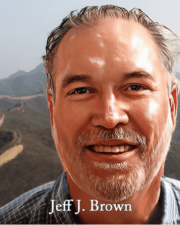
Seventeen years on the streets, living and working with the people of China, Jeff
For donations, print books, ebooks and audiobooks, please see at the bottom of this post

My comments
When I traveled to write my first book of The China Trilogy, 44 days Backpacking in China, I was in Zunyi, which is a secondary city in Guizhou Province.
It’s very famous for two things.
One is for Maotai, the high-alcohol drink that is the equivalent of vodka for Russians, bourbon for Americans and scotch for the English.
It’s also very famous for a conference that was held there in January, 1935, during the Long March.
Back then, all anybody really knew was that after that meeting, Mao Zedong was head of the Communist Party of China (CPC) and the Chinese Revolution. The Europeans and Russian Soviets, several of them who were Jewish, were out of the picture. Foreign overseers were gone.
Thus, when I got to Zunyi, I didn’t know that everything was hush hush and censored. The Zunyi Conference Memorial Hall, the museum, everything about the conference was being buried. No one had any accurate information about the Zunyi Conference, who attended or what happened.
I asked locals about it and got nothing but blank stares.
I got on the web in Chinese and there was almost nothing, except to say there was a Zunyi Conference in January, 1935, and that was really about it.
Therefore, when I saw this recent article, it really caught my attention, because it explains why it was being censored at that time in the Mainland.
This is really fascinating, since it shows that Deng Xiaoping, who took over after Mao Zedong’s death in 1976, apparently used his power, now that Mao and Zhou Enlai were both dead, to get his name added to the list of the people who attended the conference.
Even though Deng was likely not there and even if he was there, then he was nothing more than a staff member, who did not really participate in the meeting at all.
This just goes to show you that the people in power write our histories. Once Mao and Zhou were dead, Deng was able to use his influence and position to officially become a “participant” of the Zunyi Conference, by having his name added.
Clearly, when I was in Zunyi, there was still a behind-the-scenes tug of war going on between “Maoists” and “Dengists”, that had not been settled.
So, this is quite an interesting read. The anonymous writer, who is a member of the CPC, fills it with all kinds of backhanded suggestions that Deng was not there. It has a lot of details, therefore I highlighted a few lines to show you its gist. Really fascinating!
Have a great day,
真子 (Zhēnzǐ), aka Jeff J. Brown
Article
Note: several highlighted lines are my emphasis…
List of attendees at the Zunyi Conference
1) The Zunyi Conference: A Symbol of Enduring Glory.
Because of its enduring glory, the question of who participated in the Zunyi Conference has become a focus of attention. When the Zunyi Conference Memorial Hall opened in 1955 after the founding of the People’s Republic of China, Deng Xiaoping was not listed as a participant.
At that time, to strictly adhere to historical facts, the list of participants in the exhibition hall was personally reviewed and approved by Premier Zhou Enlai. Based on the list approved by Premier Zhou, the oil painting “The Zunyi Conference,” created by Qiu Ruiming, Zhang Deming, and others, depicted 18 participants. Premier Zhou was not only a very meticulous person but also possessed an exceptional memory; his review was the most authoritative confirmation, and everyone accepted it. Chairman Mao, on the other hand, was less concerned with such details. He generally entrusted such specific tasks to Premier Zhou, who trusted him implicitly.
On November 18, 1958, Deng Xiaoping, then a member of the Politburo Standing Committee and General Secretary of the Secretariat, visited the Zunyi Conference Memorial Hall accompanied by Yang Shangkun, Director of the General Office (a participant in the Zunyi Conference). Seeing that his name was not listed among the participants, Deng remarked that he had attended the Zunyi Conference and pointed to a corner of the meeting room, saying, “I sat there.”
Following this revelation, in 1959, the Zunyi Conference Memorial Hall, in order to verify the list of participants, wrote to the General Office of the Central Committee requesting assistance in locating relevant archival materials. The Central Archives replied on May 28, 1959 (Yang Shangkun, then Director of the General Office, was a participant): According to Comrade Chen Yun’s records, Deng Xiaoping’s name was not found in the available archival materials.
Based on Deng Xiaoping’s recollections at the scene, in 1965, after consulting with relevant leaders of the Guizhou Provincial Party Committee, the Zunyi Conference Memorial Hall added Deng’s name to the list of participants. However, just one year later, in 1966, Deng’s name was removed from the Zunyi Conference information plaque. It wasn’t until 1980 that the Zunyi Conference Memorial Hall reinstated Deng Xiaoping’s name when introducing the participants of the Zunyi Conference. I read a memoir that stated the Guizhou Provincial Party Committee dared not make a decision on such a significant matter without consulting Premier Zhou Enlai.
Later, it was with Premier Zhou’s approval that Deng Xiaoping was included in the list of attendees. However, why did the Central Committee Archives (then Director Yang Shangkun was a Zunyi Conference participant) reply in 1959 that they couldn’t find Deng Xiaoping’s name in the original attendee files, after Deng Xiaoping raised the issue on November 18, 1958, and why wasn’t it until 1965 that Premier Zhou agreed to add it? Given the Premier’s meticulous work style and extraordinary efficiency, how could it have taken seven years? This doesn’t make logical sense.
Therefore, the authenticity of this article cannot be verified. Another question is, if Deng Xiaoping was at the Zunyi Conference, was he a participant or a staff member? For example, in a ministry or bureau’s party group meeting, only party group members are considered participants. Although the Party Group Secretary attended the meeting, he was merely a record-keeping staff member and had neither the right to speak nor vote; he was not a participant. The Zunyi Conference was an enlarged meeting of the Central Political Bureau, attended by members and alternate members of the Political Bureau. The Political Bureau members who attended that year were: Qin Bangxian (Bo Gu), Zhu De, Zhang Wentian, Mao Zedong, Zhou Enlai, and Chen Yun. The alternate members were: Wang Jiaxiang, Deng Fa, Liu Shaoqi, and He Kequan. A total of 10 people.
The meeting was expanded to include corps commanders. Those present included: Liu Bocheng (Chief of the General Staff of the Red Army, Commander of the Military Commission Column), Li Fuchun (Acting Director of the General Political Department of the Red Army), Lin Biao (Commander of the First Army Corps), Nie Rongzhen (Political Commissar of the First Army Corps), Peng Dehuai (Commander of the Third Army Corps), Yang Shangkun (Political Commissar of the Third Army Corps), and Li Zhuoran (Political Commissar of the Fifth Army Corps), a total of 7 people. Li De attended the meeting as a military advisor to the Comintern in China. Wu Xiuquan was also present as an interpreter, but he was a staff member and not a participant.
Therefore, the oil painting “Zunyi Conference” created by Qiu Ruiming, Zhang Deming, and others only depicts 18 participants. If Deng Xiaoping was present, whether he was a participant or a staff member needs to be determined by verifying his original position. According to the Zunyi Conference Memorial Hall’s explanation since 1980, Deng Xiaoping’s position at the time of the conference was Secretary-General of the Central Committee. However, recent research by Party history workers has shown that Deng Xiaoping was the head of the “Deng-Mao (not Mao Zedong, another person with the same family name) -Xie-Gu” faction (Deng Xiaoping, Mao Zetan, Xie Weijun, and Gu Bai) in the Central Soviet Area, and was a target of wrongful persecution and marginalization, making it impossible for him to hold the position of Secretary-General of the Central Committee of the Communist Party of China.
Because the “Deng-Mao-Xie-Gu” faction supported Mao at the time, but also betrayed him a various times, Chairman Mao never forgot them. On August 14, 1972, Chairman Mao wrote an instruction on Deng Xiaoping’s letter: “Deng… should be distinguished from… (https://daydaynews.cc/en/history/1746552.html) He was persecuted in the Central Soviet Area, one of the four criminals (Deng, Mao, Xie, and Gu), and the so-called leader of the (ultra) Maoist faction, which worked against the Communist Revolution. The materials on his persecution can be found in the books ‘Two Lines’ and ‘Since the Sixth National Congress’.” (Chronicle of Mao Zedong, 1949-1976, Volume 6, p. 445) So, what position did Deng Xiaoping hold during the Long March?
According to Wang Jiaxiang’s Chronicle, before June 1933, Deng Xiaoping served as the Propaganda Minister of the Jiangxi Provincial Party Committee. In June 1933, he was dismissed and received a final serious warning from the Party. Later, at the suggestion of He Chang, the deputy director in charge of the General Political Department, and with the approval and support of Wang Jiaxiang, Deng was transferred to the General Political Department as a propaganda officer and editor-in-chief of the General Political Department’s official newspaper, “Red Star.” (From Xu Zehao’s *Chronicle of Wang Jiaxiang*, page 109, Central Literature Publishing House, December 2001, 1st edition)
Therefore, from August 6, 1933, to the Zunyi Conference in January 1935, Deng Xiaoping was the editor-in-chief of *Red Star Daily*, not the Secretary-General of the CPC Central Committee. According to *Materials on the Organizational History of the Communist Party of China (Volume 2): The Land Revolution War Period (August 1927 – July 1937)* and other Party history documents, there was no position of “Secretary-General of the CPC Central Committee” during the Long March. The so-called “Secretary-General of the CPC Central Committee” was actually the secretary-general of the “Central Team” (where all central leaders were assigned) in the Long March march sequence.
 2) Exhibition panels at the Zunyi Conference Memorial Hall (Liu Ying and his wife).
Deng Xiaoping’s position as “Secretary-General of the Central Team” was later taken over by Liu Ying (see above image). Liu Ying recalled that the duties of the “Secretary-General of the Central Team” were: 1. To take care of the lives of the central leaders; 2. To do ideological work with the guards; 3. To take minutes at meetings. (Liu Ying, *In the Whirlpool of History*, pp. 66-67, CCP Party History Publishing House, September 1992, 1st edition)
This makes sense. The Zunyi Conference was held during the march, so it’s logical that the “Secretary-General of the Central Team,” who was accompanying the Central Team, was temporarily assigned to take minutes.
Unfortunately, the meeting minutes taken by Deng Xiaoping were lost and cannot be found to this day.
The list of attendees and observers provided in Chen Yun’s handwritten *Outline for the Transmission of the Zunyi Conference* does not include either Deng Xiaoping’s or Wu Xiuquan’s names, which also matches. Chen Yun recorded the attendees and observers, omitting the names of staff members, which is also logical. (Chen Yun, “Outline for the Enlarged Meeting of the Political Bureau in Zunyi (February or March 1935)”)
In conclusion, if Deng Xiaoping did attend the Zunyi Conference, his status would have been neither that of an attendee nor a observer, but rather that of a conference staff member.
 3) Oil painting: The Zunyi Conference (later work)
This later oil painting of the Zunyi Conference showed 20 people in the hall, with one more figure faintly visible in the upper right corner, making a total of 21. This was perhaps to accommodate the inclusion of Li De, Wu Xiuquan, and Deng Xiaoping.
Furthermore, the Zunyi Conference was originally scheduled for January 7th to 9th, but it’s unclear why it was changed to January 15th to 17th in the 1980s. This is also questionable. Perhaps they attended a different conference held in Zunyi, not the Zunyi Conference itself.
In the latest Zunyi Conference Memorial Hall exhibit, Li De, Wu Xiuquan, and Deng Xiaoping are listed separately in the photos of the participants. This is a form of progress, perhaps.
History is not a child to be dressed up as one pleases.
Seeking truth from facts is the lifeline of our Party.
Whether it’s Party history, military history, or national history, only by adhering to the principle of seeking truth from facts, getting to the root of the matter, and restoring the true face of history can we increase credibility and strengthen national cohesion.
Conversely, the same applies.
References
https://mp.weixin.qq.com/s/5SSEj_ZATXfy9CIdZYoKwQ
A critique of the recent article in The New Yorker Magazine by Evan Osnos, “China’s Age of Malaise”
A critique of the recent article in The New Yorker Magazine by Evan Osnos, “China’s Age of Malaise”
Time magazine thought it was mocking Chinese President Xi Jinping, by portraying him as Mao Zedong on the inside. The joke is on Evan Osnos and the rest of the West. That was the plan all along: Xi was elected to be the Chinese people’s 21st century Great Helmsman.
Further reading
The Mao Encyclopedia for Dummies. Updated and it’s all here: books, articles, movies, visuals. China Rising Radio Sinoland 240103
Jeff J. Brown’s many libraries and catalogues EXPANDED and they R-O-C-K with all of humanity – past, present & future! Our Pale Blue Dot’s story all on one page! Radio Sinoland 260531
Radio Sinoland’s Library on the Chinese Zodiac, Lunar, Agricultural and Civil Calendars. Want to understand the Chinese people? It all starts here! Radio Sinoland 260522
My long, slow arc of spiritual awareness from childhood Presbyterianism to Eastern Thought today. With expanded and improved, printable “Noble Attributes of Chinese Civilization” summary. Radio Sinoland 260213
A look at China’s education system versus the West. Different cultures, expectations and outcomes. China Rising Radio Sinoland 240618
China has the world’s best merit-based education system. Here’s why. China Rising Radio Sinoland 191210
Living library on Judaism. Continually updated. With image texts and video transcripts to easily copy for your use, and for translating them and this webpage in all available languages!
https://radiosinoland.com/2025/01/23/judaism/
Go Russia GO!
Go Iran GO!
Go China GO!
Go DPRK GO!
Go “RICK”! Go Asian Quad!
KICK JUDEO-TALMUD-TANAKH ASS!!!
Support, donations and contributions for my work here, any amount, one time or monthly,
A to Z support. Thank you in advance, Jeff
Checks or cash: mail to: Jeff J. Brown, 7 rue du Général de Gaulle, Équeurdreville 50120, France
Donorbox: www.donorbox.com, find China Rising Radio Sinoland
Euro bank wires: 44 Days Publishing, Bank: TransferWise, IBAN: BE70 9672 2959 5225
FundRazr: https://fundrazr.com/CRRS_2021_fundraiser?ref=ab_78aX23
Patreon: https://www.patreon.com/China_Rising_Radio_Sinoland OR https://www.patreon.com/China_Tech_News_Flash
Paypal: https://www.paypal.me/ChinaRisingRadioSino
Stripe US$/ApplePay: https://buy.stripe.com/14k8zl5tp5mVeT66op
Stripe Euros/ApplePay: https://buy.stripe.com/fZe02P8FB9DbcKY28a
US bank wires: Jeff J. Brown, Bank of Oklahoma, Routing Number/ABA: 103900036, Account: 592243855
WeChat and Alipay:

Books by Mike Palecek
“The Truth is Here”
Mike Palecek writes with passion, wit, and always
with a strong social conscience.
— Howard Zinn
 https://mikepalecek.substack.com/p/common-sense-6df
Paid Advertisement
Further study
The China Trilogy is an honorary degree in Chinese Studies. Don’t miss out!
https://www.amazon.com/stores/author/B00TX0TDDI/allbooks and
Jeff J. Brown’s libraries and catalogues A-Z: 1,000s of hours of research, writing, editing and podcasting.
https://radiosinoland.com/2025/11/30/jeff-j-browns-ever-expanding-collection-of-living-libraries-and-catalogues-many-years-and-1000s-of-hours-of-writingpodcasting-take-advantage-of-them-radio-sinoland-2025-year-of-the-wood-snake/
Do yourself, your friends, family and colleagues a favor, to make sure all of you are Sino-smart:
Google ebooks (Epub) and audiobooks:
44 Days Backpacking in China: The Middle Kingdom in the 21st Century, with the United States, Europe and the Fate of the World in Its Looking Glass https://play.google.com/store/books/details?id=YBKHEAAAQBAJ
https://play.google.com/store/audiobooks/details?id=AQAAAECCkQXRlM
China Rising: Capitalist Roads, Socialist Destinations https://play.google.com/store/books/details?id=YNmLEAAAQBAJ
https://play.google.com/store/audiobooks/details?id=AQAAAECCfHo86M
BIG Red Book on China: Chinese History, Culture and Revolution
https://play.google.com/store/books/details?id=6Wl4EAAAQBAJ
https://play.google.com/store/audiobooks/details?id=AQAAAECCfHo86M
Amazon print and ebooks (Kindle):
44 Days Backpacking in China: The Middle Kingdom in the 21st Century, with the United States, Europe and the Fate of the World in Its Looking Glass
https://www.amazon.com/gp/product/1484939999/
China Rising: Capitalist Roads, Socialist Destinations
https://www.amazon.com/China-Rising-Capitalist-Socialist-Destinations/dp/0996487042
BIG Red Book on China: Chinese History, Culture and Revolution
https://www.amazon.com/BIG-Red-Book-China/dp/1673322719/
Author page:
https://www.amazon.com/Mr.-Jeff-J.-Brown/e/B00TX0TDDI
Praise for The China Trilogy:
Why and How China works: With a Mirror to Our Own History


JEFF J. BROWN, Editor, China Rising, and Senior Editor & China Correspondent, Dispatch from Beijing, The Greanville Post
Jeff J. Brown is a geopolitical analyst, journalist, lecturer and the author of The China Trilogy. It consists of 44 Days Backpacking in China – The Middle Kingdom in the 21st Century, with the United States, Europe and the Fate of the World in Its Looking Glass (2013); Punto Press released China Rising – Capitalist Roads, Socialist Destinations (2016); and BIG Red Book on China (2020). As well, he published a textbook, Doctor WriteRead’s Treasure Trove to Great English (2015). Jeff is a Senior Editor & China Correspondent for The Greanville Post, where he keeps a column, Dispatch from Beijing and is a Global Opinion Leader at 21st Century. He also writes a column for The Saker, called the Moscow-Beijing Express. Jeff writes, interviews and podcasts on his own program, China Rising Radio Sinoland, which is also available on YouTube, Stitcher Radio, iTunes, Ivoox and RUvid. Guests have included Ramsey Clark, James Bradley, Moti Nissani, Godfree Roberts, Hiroyuki Hamada, The Saker and many others. [/su_spoiler]
Jeff can be reached at China Rising, [email protected], Facebook, Twitter, Wechat (+86-19806711824/Mr_Professor_Brown, and Line/Telegram/Whatsapp: +33-612458821.
Read it in your language • Lealo en su idioma • Lisez-le dans votre langue • Lies es in deniner Sprache • Прочитайте это на вашем языке • 用你的语言阅读
[google-translator]
Wechat group: search the phone number +8619806711824 or my ID, Mr_Professor_Brown, friend request and ask Jeff to join the China Rising Radio Sinoland Wechat group. He will add you as a member, so you can join in the ongoing discussion.
 I contribute to