Amir&Jeff’s Excellent China Adventure Series. 2025: Hunan, Jiangxi, Fujian and Shaanxi Provinces’ Red Tour. Short videos with transcripts, captioned photos, articles and commentary. The REAL Chinese people you don’t know!
Comment by Jeff
Communist Revolution comes to Muslim Xinjiang
This historical monument was our first official visit to commemorate our 2026 Red Tour in Xinjiang Province, in the small city of Hami (哈密), with 670,000 mostly Muslim souls, which is the gateway to the rest of Central and Eastern China, towards the Gansu Province border.1.61*2

Xinjiang is huge, 1.66 million square kilometers, which is three times the size of France, or bigger than Alaska in North America. It is mostly desert, mountains, basins and high plateaus, with a few beautiful lakes. In fact, Hami is over 900 meters above sea level. Weather is harsh here. When we arrived on 5 August, the temperature was 41 degrees. In the winter, it can drop to minus twenty.
For our one-month Red Tour adventure in Xinjiang, we will get a far west as Aksu and as far south as Korla. It is already starting out as an amazing lunar cycle.
Amir and I love the history, the reverence and admiration that China’s Red sites educate the public with. Not so many foreigners. After leaving Changsha, Hunan Province the morning of the fifth, we are the only two Westerners in sight, but that will likely change in Xinjiang’s capital, Urumuqi. This is a common observation for Amir, my wife Evelyne and me throughout of many travels across China. Ninety percent of Westerners visit Beijing, Shanghai, Chongqing, Guangdong and a few popular UNESCO parks and that’s about it. Better than nothing, but getting out into the countryside is where we really appreciate Chinese daily life and culture.
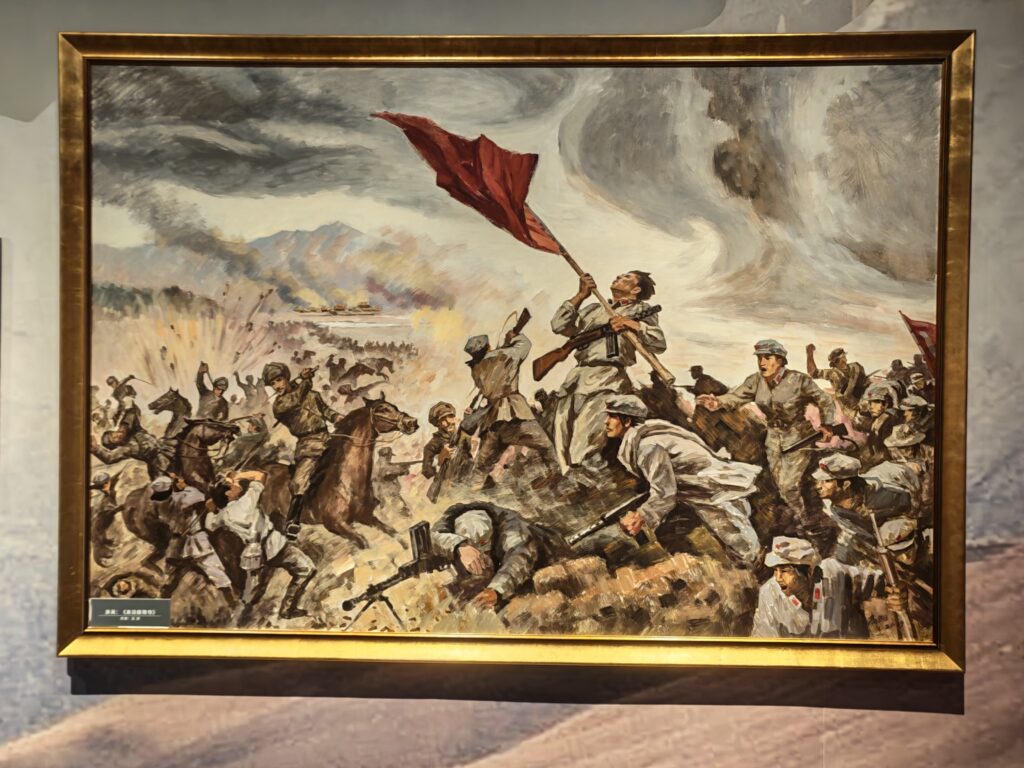
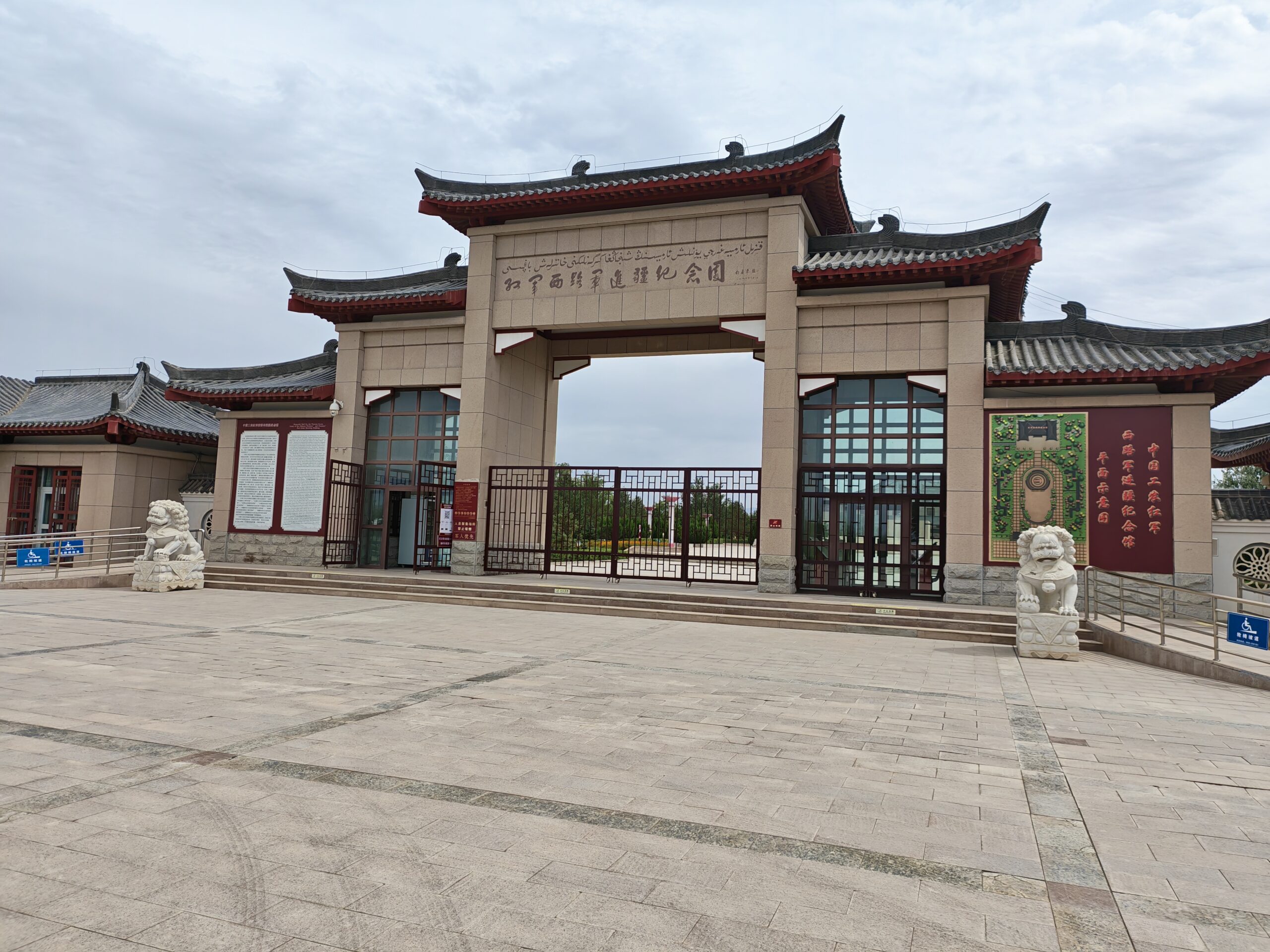
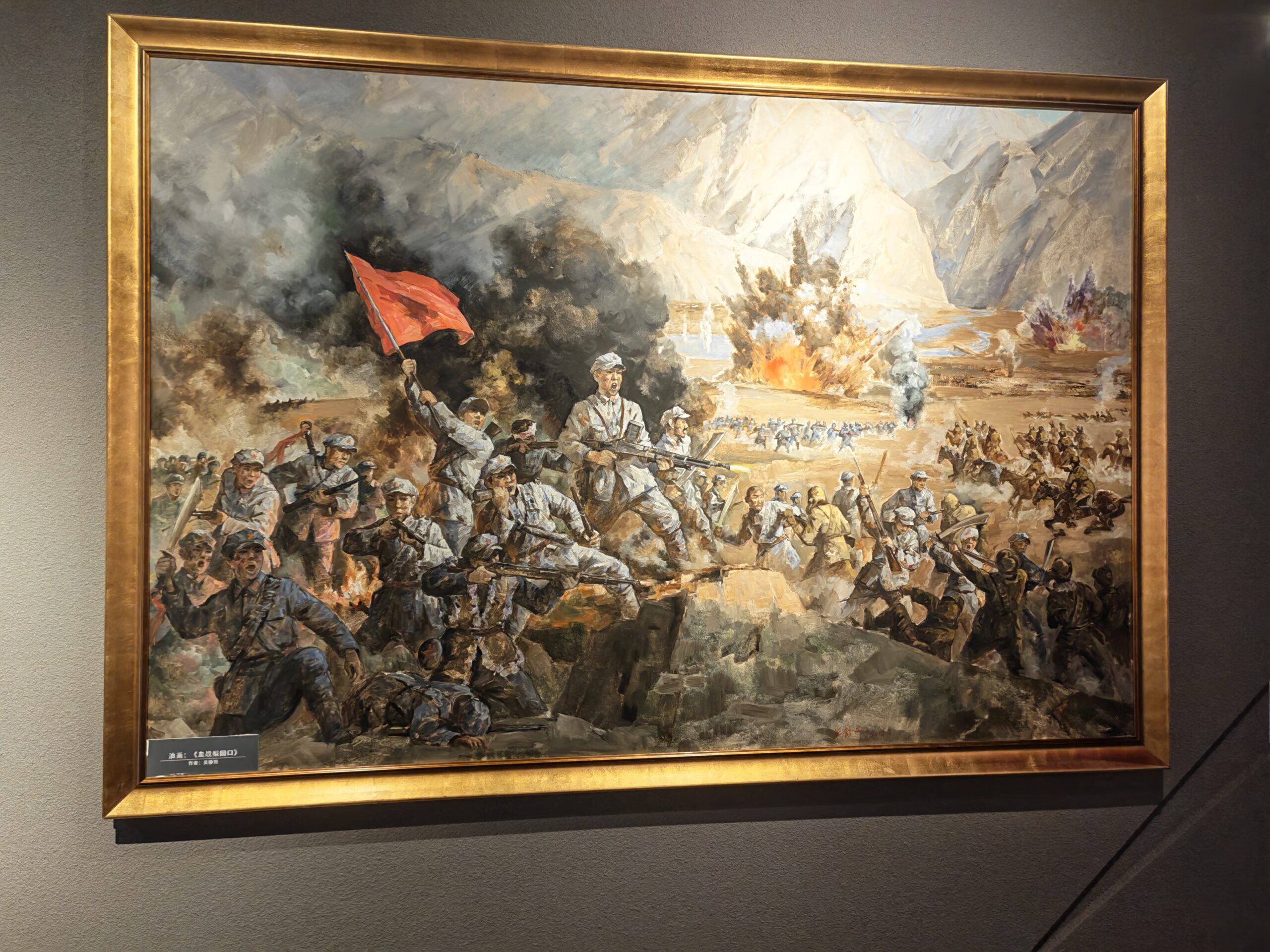
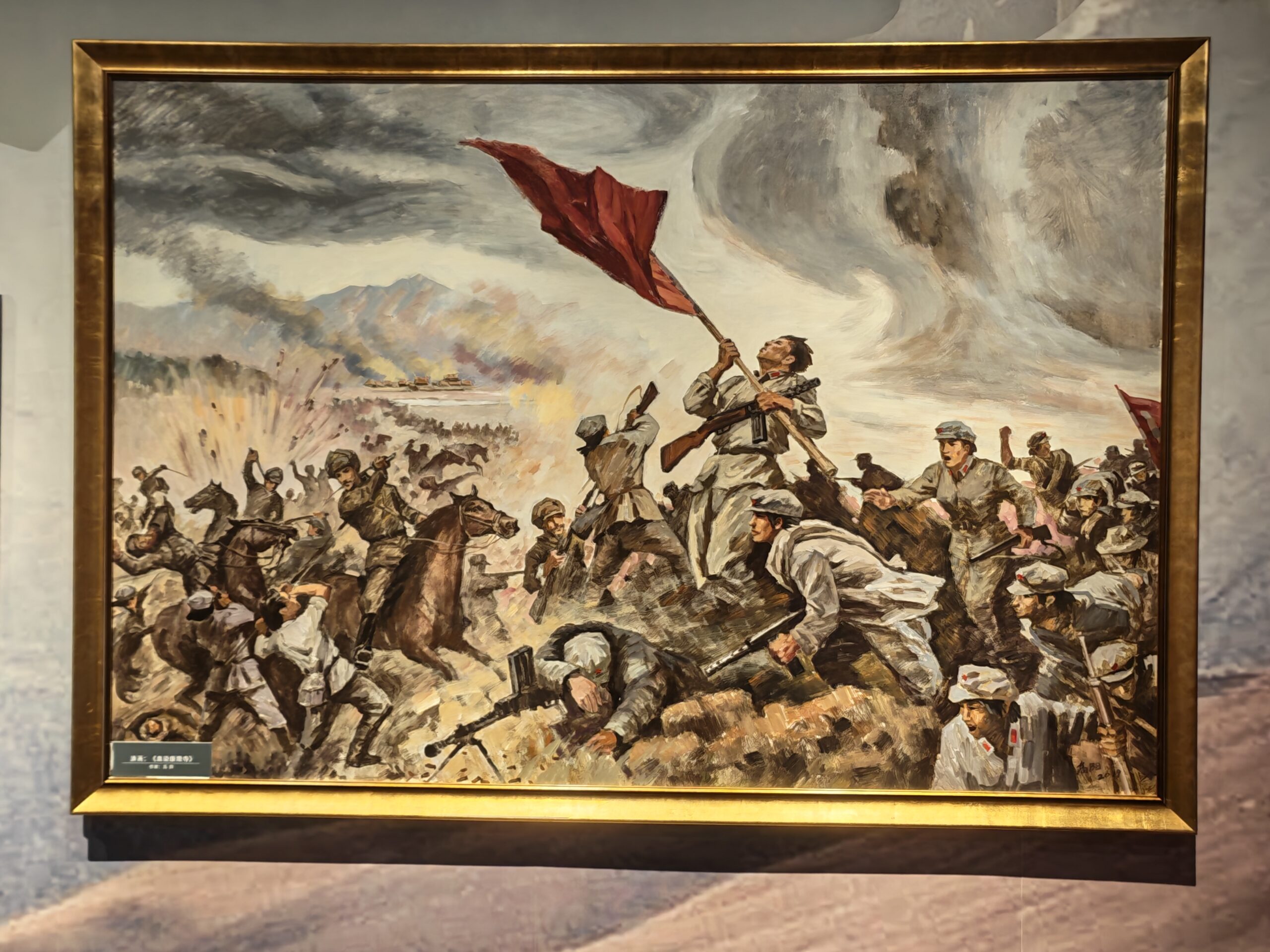
Below are some photos of our visit to the Red Army Museum, about 16km outside Hami. The Chinese invest millions of your favorite currency in their museums and monuments. They are of an exceptional quality, well laid out and highly informative. They excel in map making, dioramas, paintings, sculptures and digging up archival documents, film and sound recordings.
To give you a feel for how Baba Beijing presents historical information, below’s text is the translation of a huge inscription, as you enter the museum grounds. They really get into details and proudly present those who played a part. Martyrs are eulogized and surviving heroes are praised by the Chinese public, who loves to take in all these details.
As you can see below, grade school children are being educated to protect and defend the Motherland. Patriotism is one of China 12 core socialist values and citizens take it very seriously.
Inscription on the Monument to the West‑Route Army of the Chinese Workers’ and Peasants’ Red Army Entering Xinjiang
In the autumn of 1936, the Long March of the Chinese Workers’ and Peasants’ Red Army came to a victorious end. On October 25, by order of the Military Commission of the Chinese Soviet Republic, the 30th Army of the Fourth Front Army of the Red Army crossed the Yellow River westward. Subsequently, the 9th Army, the Headquarters of the Fourth Front Army and the 5th Army also crossed the Yellow River, preparing to carry out the Ningxia Campaign Plan. Later, due to changes in the enemy situation east of the Yellow River, the Ningxia Campaign Plan was suspended.
On November 11, the Central Committee of the Communist Party of China and the Central Military Commission designated the troops that had crossed the river as the West‑Route Army, with its leading organ being the Military‑Political Commission of the West‑Route Army. Chen Changhao served as chairman and Xu Xiangqian as vice‑chairman. More than 20,000 officers and soldiers of the West‑Route Army marched into the Hexi Corridor. Defying wind, snow and hardship, they fearlessly sacrificed themselves and fought bloody battles for over five months. They suffered more than 20,000 casualties and were defeated by the enemy in March 1937.
The remaining troops were divided into three detachments. Under the leadership of the West‑Route Army Working Committee composed of Li Zhuoran, Li Xiannian and others, they moved into the Qilian Mountains to wage guerrilla warfare. Two detachments suffered heavy losses. The Left‑wing Detachment led by Li Xiannian endured untold hardships and reached Xingxing Gorge in Xinjiang at the end of April.
The Central Committee of the Communist Party of China was extremely concerned about the safety of the West‑Route Army and made every effort to rescue them. On May 1, 1937, Chen Yun and Teng Daiyuan, representatives of the CPC Central Committee, travelled all the way to Xingxing Gorge to meet and receive more than 420 remaining officers and soldiers of the West‑Route Army. They then travelled via Hami to Dihua (present‑day Urumqi).
After entering Dihua, the remaining troops of the West‑Route Army were reorganized into the General Detachment of the West‑Route Army of the Chinese Workers’ and Peasants’ Red Army, known publicly as the “New Barracks”. Following the instructions of the CPC Central Committee, they diligently studied technologies including automobiles, armoured vehicles, artillery, radio communications, aviation, military medicine and intelligence. When the War of Resistance against Japanese Aggression broke out, units of this detachment returned to the Shaanxi‑Gansu‑Ningxia Border Region in batches.
The units under the West‑Route Army were heroic troops nurtured over a long period by the Communist Party of China and tempered in arduous struggles. Under extremely difficult circumstances, they waged desperate life‑and‑death battles against Kuomintang reactionary troops. The broad ranks of officers and soldiers of the West‑Route Army upheld the revolution, embodied fearless and dauntless heroism, and showed dauntless dedication to the Party and the people. Their spirit is forever worthy of our respect and remembrance.
Eternal glory to the martyrs who laid down their lives for the cause of the Chinese revolution in the struggles!
The Prefectural Committee of the Communist Party of China for Hami Prefecture
Hami Prefectural Administrative Office
October 1, 1993
Photos by Amir



###
The buck stops with YOU. If you don't share this, who will?
Categories:
Baba Beijing,
Beijing,
china,
China history,
China Is Communist,
China Rising,
China Tech News Flash!,
Chinese culture,
Communist Party of China,
CPC,
Fundraising,
Jeff J. Brown,
Podcast,
Radio Sinoland,
Shenzhen,
Travel | Tags:
1949,
Adventure,
Baba Beijing,
Beijing,
Big Lie Propaganda Machine,
BLPM,
Buses,
Canada,
Capitalism,
China,
Colonialism,
Communism,
Communist Party of China,
Deep State,
Eurangloland,
Europe,
Fascism,
France,
Genocide,
High-Speed Trains,
Imperialism,
Infrastructure,
Japan,
Jeff J Brown,
Korea,
Mao Zedong,
Memorials,
Museums,
NATO,
Plazas,
Propaganda,
Public Places,
Radio Sinoland,
Russia,
Slow Trains,
Socialism,
Squares,
Statues,
Steles,
Taxis,
The China Trilogy,
Tourism,
World War II,
Xi Jinping






 I contribute to