Amir&Jeff’s Excellent China Adventure Series. 2026: Xinjiang Province Red Tour. Photos and commentary. The REAL Chinese people you do not know!
Amir&Jeff’s Excellent China Adventure Series. 2025: Hunan, Jiangxi, Fujian and Shaanxi Provinces’ Red Tour. Short videos with transcripts, captioned photos, articles and commentary. The REAL Chinese people you don’t know!
https://radiosinoland.com/2025/07/27/amirjeffs-excellent-china-adventure-series-2025-hunan-jiangxi-fujian-and-shaanxi-provinces-red-tour-short-videos-captioned-photos-articles-and-commentary-the-real-chinese-people-you-don/
Short intro to Xinjiang by Jeff

Xinjiang is huge, 17% of the country’s landmass, 1.66 million square kilometers (China’s total land area = 9.6 million), which is three times the size of France, or bigger than Alaska in North America. It is mostly desert, mountains, basins and high plateaus, with beautiful lakes. Weather is harsh here. When we arrived on 5 August, the temperature was 41 degrees. In the winter, it can drop to minus twenty.
For our one-month Red Tour adventure in Xinjiang, we will get a far west as Aksu and as far south as Korla. It is already starting out as an amazing lunar cycle.
The Uyghur people in China are members of the Turkic language group, of which there are many derivatives, starting in Turkey, of course, and there’s a swath going from there to the east through South Central Asia. They are, at varying degrees, mutually understood, from 0 to maybe 75%, depending on the dialect. For example, Turkish and Uyghur are 30% mutually comprehensible.
So Uyghurs are, in fact, Turkic people.
Xinjiang’s population is 26 million, 58% Muslim. The capital is Urumuqi. It has four million residents. Hami has 670,000 citizens. Shihezi, Karamay, Korla, Yining and Aksu are other cities we are visiting each have about 500,000 souls.
West to east, Xinjiang has common international borders with Pakistan, Tajikistan, Afghanistan, Kyrgyzstan, Kazakhstan, Russia and Mongolia. Internally, it borders the provinces of Gansu, Qinghai and Tibet, north to south. It is now a hugely important nexus in Asia’s Belt and Road Initiative (BRI), connecting the rest of China with the rest of Mackinder’s Heartland. On that note,
Jeff J. Brown comments on Sputnik News- Putin: China’s Belt and Road Initiative ‘in Sync With Russia’s Ideas on Large Eurasian Space’. China Rising Radio Sinoland 231027
Not only industry and commerce, Xinjiang is a massive producer of high value crops, including a huge variety of fruits, vegetables and cotton. We see lush, green fields and orchards stretching kilometer after kilometer, thanks to one of the biggest water canal and irrigation systems in the world, starting in the Altai Mountains, over 400km away. The BRI has made it possible to ship large quantities of this produce all over Asia.
Amir’s brief comments
Western Western- Frontier Narratives
We all know that the US and Israel like to pretend that their progression westward was simply to populate and claim empty land. The murder and massacre of the people who actually lived along an ever expanding frontier conflict with the origin stories these countries like to tell themselves.
China has a western frontier myth of its own. If you’d like to ingratiate yourself within it, a single trip to the Army Reclamation Museum and Square in Shihezi allows you to do so. All you require is an afternoon.
The Junggar basin at the outskirts of the Gobi Desert is actually depopulated. Yet beginning in the 1950s, the Communist Party of China took it upon itself not to claim, but to re-claim the deserted land. But reclaim from who?
Reclamation here means to reclaim from nature; not only to repopulate the land but to make it arable once again, to push back against desertification. But why?
I mentioned earlier that a major part of the Communist Party’s ruling legitimacy is linked to seeing the people in its western frontier territories thrive. Protecting borders is one thing; but far more important to develop the land within these borders. Otherwise, what’s the point of having borders?
Note the cities we’ve travelled to thus far and their respective populations:
Hami – 450k
Urumuqi – 4.1 million
Shihezi – 350k
Karamay – 475k
These would be considered major urban metropolises in Canada; but in China, these are small towns. These cities, therefore, are not the flagship “faces of China” you see on social media. The technology and infrastructure of China’s megalopolises have not made their way out West. Yet however much life in Xinjiang differs, or is similar to, the rest of China, one thing the CPC has indisputably achieved in this region is safety.
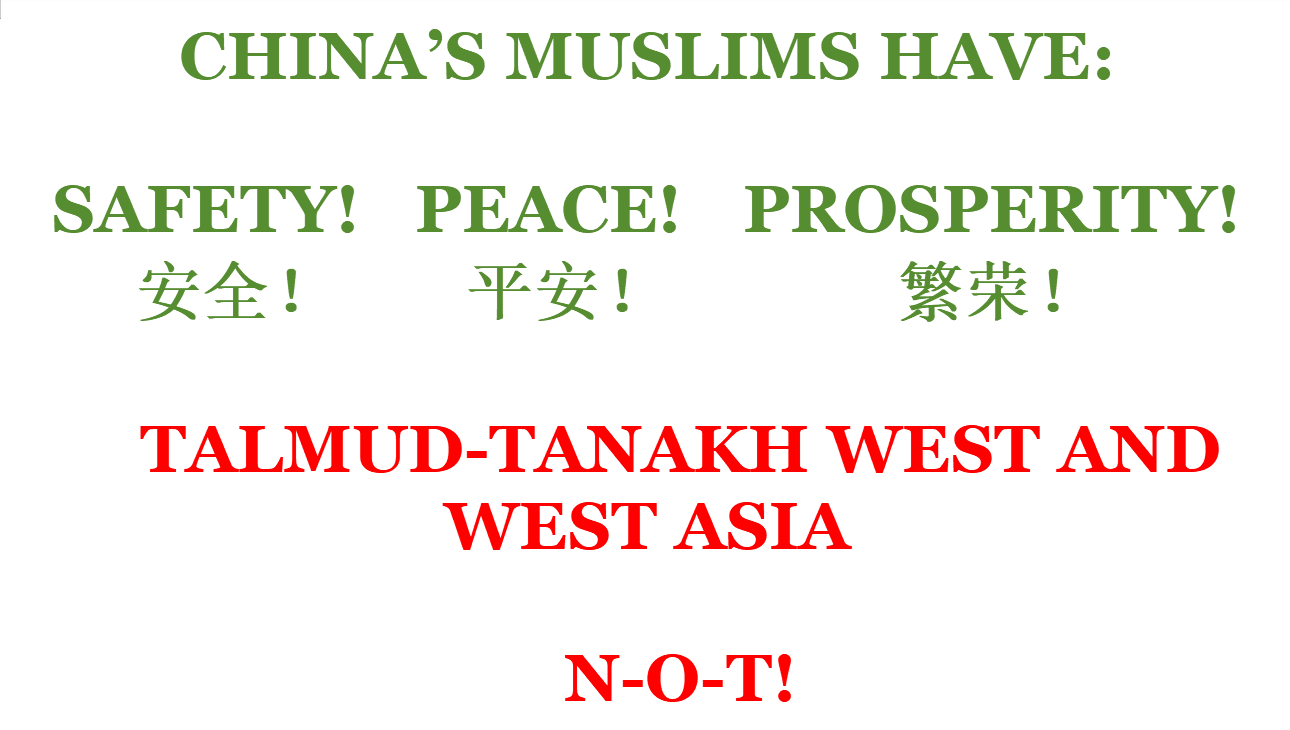
Talk to any Chinese local and the first thing they will tell you is that China is safe. This is indisputable. Unlike Western countries, you can go anywhere at any time of day or night, and you will never fear for your life. (There are parts of Toronto and New York, for example, where I would never venture, even in broad daylight.) In China, safety is very much an afterthought.
China’s frontier (hence reclamation) narrative, is predicated on development (both human and agricultural), but also to safety. You may perhaps be non-plussed about Xinjiang’s scenery, its economy, its architecture, its food, its cleanliness; but one thing I guarantee you will take for granted is how safe you feel here.
###
 I contribute to