
TRANSLATION MENU: LOOK UPPER RIGHT BELOW THE SOCIAL MEDIA ICONS.
IT OFFERS EVERY LANGUAGE AVAILABLE AROUND THE WORLD!
ALSO, SOCIAL MEDIA AND PRINT ICONS ARE AT THE BOTTOM OF THIS POST!
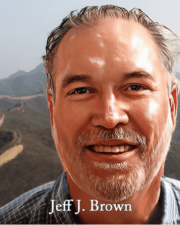
Seventeen years on the streets, living and working with the people of China, Jeff
For donations, print books, ebooks and audiobooks, please see at the bottom of this post

My comments
I’ve written a lot of posts over the years about Chinese museums, monuments, and so on.
A good place to start is below, in the References—specifically “Amir&Jeff’s Excellent China Adventure Series”, and “Evelyne& Jeff’s Excellent China Adventure Series”.
Wherever Evelyne, Amir and I go, we always visit museums. It doesn’t matter if it’s a small local spot or one of the magnificent municipal, regional, or national museums; they are all worth seeing.
We visit museums everywhere because they are high quality, over 90% which are FREE and such a key part of Chinese culture and civilization. That’s because the Chinese people are passionate about museums—covering everything from history, art, national and global cultures, their communist socialist revolution to their civil war, and more.
On weekends, at many museums—especially the larger ones—it can be shoulder-to-shoulder, just trying to view the exhibits. Even during the week, Chinese museums are full of people. Parents and grandparents take their children to museums before they star going to school. On weekends, the museums are packed with young Chinese. During the week, schools organize busloads of visits for students to see museums and learn about China’s incredible history, spanning from 5,000 years ago to the present day.
Below, you’ll find museum-related quotes by Mao Zedong and Xi Jinping, found on the Chinese web, in English, Pinyin and Mandarin for language learners.
No self-respecting Chinese official can ignore museums in the areas they govern. If they did, the people wouldn’t be happy, because the public—and the leaders themselves—attach great importance to these repositories of knowledge and culture. Even local leaders—mayors and city officials—visit museums to promote them and demonstrate their interest to their fellow citizens.
Mao Zedong
Mao Zedong did not write extensively on the institution of museums in a philosophical sense, like Xi Jinping, yet he made many profound remarks regarding the importance of history, the preservation of cultural relics, and the role museums play in educating the masses. He also frequently used “museum” as a powerful metaphor for obsolete systems that belong to the past.
There are many more, of which I’ve seen several, but here are eight quotes and statements by Mao Zedong related to museums, history, and cultural heritage, provided in Mandarin, Pinyin, and English for language learners
1. On the necessity of museums for public education (1958)
During a visit to the Anhui Provincial Museum in 1958, Mao emphasized that museums are essential tools for the public to understand their own historical agency.
Mandarin: 每个省的主要城市,都应该有这样的博物馆,人民要认识自己的历史和创造历史的力量。
Pinyin: Měi gè shěng de zhǔyào chéngshì, dōu yīnggāi yǒu zhèyàng de bówùguǎn, rénmín yào rènshi zìjǐ de lìshǐ hé chuàngzào lìshǐ de lìliàng.
English: “Every major city in each province should have a museum like this; the people must understand their own history and the power to create history.”
2. On the value of museum collections (1958)
Also during his 1958 tour of the Anhui Provincial Museum, Mao expressed his satisfaction with the depth of the historical and socialist construction exhibits.
Mandarin: 相当丰富,看不完。
Pinyin: Xiāngdāng fēngfù, kàn bù wán.
English: “Quite rich, too much to see.” (Or: “Extremely rich, impossible to see it all.”)
3. On learning from historical relics
While visiting an exhibition of unearthed cultural relics held at the Forbidden City (Palace Museum), Mao pointed to the artifacts and stressed the importance of learning from them.
Mandarin: 这就是历史,你们应当学点历史,要懂得历史。
Pinyin: Zhè jiù shì lìshǐ, nǐmen yīngdāng xué diǎn lìshǐ, yào dǒngde lìshǐ.
English: “This is history. You should learn some history and understand history.”
4. On the continuity of history
Mao frequently used this metaphor to emphasize that a nation’s present is inextricably linked to its past—a core reason why history museums exist.
Mandarin: 不但要懂得中国的今天,还要懂得中国的昨天和前天。
Pinyin: Búdàn yào dǒngde Zhōngguó de jīntiān, hái yào dǒngde Zhōngguó de zuótiān hé qiántiān.
English: “We must not only understand China’s today, but also understand China’s yesterday and the day before yesterday.”
5. On preserving the “precious treasures” of history
In a 1938 report, Mao highlighted the importance of studying and preserving China’s historical heritage, referring to historical relics and cultural achievements as “precious treasures.”
Mandarin: 我们这个民族有数千年的历史,有它的特点,有它的许多珍贵品。对于这些,我们还是小学生。今天的中国是历史的中国的一个发展;我们是马克思主义的历史主义者,我们不应当割断历史。
Pinyin: Wǒmen zhège mínzú yǒu shù qiān nián de lìshǐ, yǒu tā de tèdiǎn, yǒu tā de xǔduō zhēnguì pǐn. Duìyú zhèxiē, wǒmen háishì xiǎoxuéshēng. Jīntiān de Zhōngguó shì lìshǐ de Zhōngguó de yí gè fāzhǎn; wǒmen shì Mǎkèsī zhǔyì de lìshǐ zhǔyì zhě, wǒmen bù yīngdāng gēduàn lìshǐ.
English: “Our nation has thousands of years of history, with its own characteristics and many precious treasures. Regarding these, we are still primary school students. Today’s China is a development of historical China; we are Marxist historicists and should not sever history.”
6. Feudalism in the “Museum of History” (1940)
In his famous work On New Democracy, Mao used the “museum” metaphorically to represent systems that are dead and belong only to the past.
Mandarin: 封建主义的思想体系和社会制度,是进了历史博物馆的东西了。
Pinyin: Fēngjiàn zhǔyì de sīxiǎng tǐxì hé shèhuì zhìdù, shì jìn le lìshǐ bówùguǎn de dōngxi le.
English: “The ideological and social system of feudalism has become something that belongs in the museum of history.”
7. Capitalism entering the “Museum” (1940)
Continuing his metaphor from On New Democracy, Mao argued that capitalism was also destined to become a historical relic.
Mandarin: 资本主义的思想体系和社会制度,已有一部分进了博物馆(在苏联);其余部分,也已“日薄西山,气息奄奄,人命危浅,朝不虑夕”,快进博物馆了。
Pinyin: Zīběn zhǔyì de sīxiǎng tǐxì hé shèhuì zhìdù, yǐ yǒu yí bùfen jìn le bówùguǎn (zài Sūlián); qíyú bùfen, yě yǐ “rì bó xī shān, qì xī yǎn yǎn, rén mìng wēi qiǎn, zhāo bù lǜ xī”, kuài jìn bówùguǎn le.
English: “The ideological and social system of capitalism has already partly entered the museum (in the Soviet Union); the rest is already ‘like the sun setting in the west, its breath faint, its life ebbing, its end drawing near’, and will soon enter the museum too.”
8. On the protection of cultural relics and historical sites (1949)
During the Pingjin Campaign in 1949, Mao issued specific military directives to the People’s Liberation Army to protect the cultural heritage of Beijing (including the Forbidden City) from artillery damage, ensuring these “museums” of Chinese architecture would survive.
Mandarin: 积极准备攻城。……必须做出精密计划,力求保护文物古迹。
Pinyin: Jījí zhǔnbèi gōng chéng. …… Bìxū zuò chū jīngmì jìhuà, lìqiú bǎohù wénwù gǔjì.
English: “Actively prepare to attack the city… Must make careful plans, striving to protect cultural relics and historical sites.”
Xi Jinping
There are countless more of which I’ve seen many, but here are eight quotes and statements by Xi Jinping related to museums, history, and cultural heritage, provided in Mandarin, Pinyin, and English for language learners
1. On the educational role of museums (2015)
During a 2015 inspection of the Xi’an Museum, Xi made his most famous remark about the institution itself, which is now displayed in nearly every major museum in China.
Mandarin: 一个博物院就是一所大学校。
Pinyin: Yí gè bówùyuàn jiùshì yì suǒ dà xuéxiào.
English: “A museum is a university.”
2. On “bringing relics to life” (2013–Present)
This is arguably his most frequently cited directive regarding museum curation. He has repeated this in various speeches, including a 2020 Politburo study session on archaeology, urging museums to make history accessible and engaging rather than static.
Mandarin: 让收藏在博物馆里的文物、陈列在广阔大地上的遗产、书写在古籍里的文字都活起来。
Pinyin: Ràng shōucáng zài bówùguǎn lǐ de wénwù, chénliè zài guǎngkuò dàdì shàng de yíchǎn, shūxiě zài gǔjí lǐ de wénzì dōu huó qǐlái.
English: “Let the relics collected in museums, the heritage displayed across the vast land, and the characters written in ancient books all come alive.”
3. On museums as bridges between civilizations (2022)
In a letter to veteran experts at the National Museum of China on its 110th anniversary, Xi defined the geopolitical and cultural purpose of museums on the world stage.
Mandarin: 博物馆是保护和传承人类文明的重要殿堂,是连接过去、现在、未来的桥梁,在促进世界文明交流互鉴方面具有特殊作用。
Pinyin: Bówùguǎn shì bǎohù hé chuánchéng rénlèi wénmíng de zhòngyào diàntáng, shì liánjiē guòqù, xiànzài, wèilái de qiáoliáng, zài cùjìn shìjiè wénmíng jiāoliú hùjiàn fāngmiàn jùyǒu tèshū zuòyòng.
English: “Museums are important halls for protecting and inheriting human civilization, and are bridges connecting the past, the present, and the future, playing a special role in promoting exchanges and mutual learning among world civilizations.”
4. On museums as empirical evidence of Chinese history (2022)
Also from his 2022 letter to the National Museum of China, this quote is often used in history museums to contextualize China’s long timeline.
Mandarin: 博物馆有很多宝贵文物甚至‘国宝’,它们实证了我国百万年的人类史、一万年的文化史、五千多年的文明史。
Pinyin: Bówùguǎn yǒu hěnduō bǎoguì wénwù shènzhì ‘guóbǎo’, tāmen shízhèng le wǒguó bǎiwàn nián de rénlèi shǐ, yí wàn nián de wénhuà shǐ, wǔ qiān duō nián de wénmíng shǐ.
English: “Museums house many precious cultural relics, even ‘national treasures,’ which provide empirical evidence of our country’s million-year history of humanity, ten-thousand-year history of culture, and over 5,000-year history of civilization.”
5. On the necessity of visiting museums (2021)
While inspecting museums in Guangxi in 2021, Xi explained his own personal habit of visiting museums during his domestic tours, highlighting their value in understanding local context.
Mandarin: 我到地方考察,都会抽时间到博物馆走一走、看一看,目的是更好了解一个地方的历史文化沿革。
Pinyin: Wǒ dào dìfāng kǎochá, dōu huì chōu shíjiān dào bówùguǎn zǒu yì zǒu, kàn yí kàn, mùdì shì gèng hǎo liǎojiě yí gè dìfāng de lìshǐ wénhuà yángé.
English: “Whenever I travel to local areas for inspection, I always make time to visit museums. The purpose is to better understand the historical and cultural evolution of a place.”
6. On the intergenerational duty of protecting relics (2016)
In a 2016 directive on the protection of cultural heritage, Xi laid out the philosophical weight of museum collections. This quote is frequently found in the preface of archaeological museums.
Mandarin: 文物承载灿烂文明,传承历史文化,维系民族精神,是老祖宗留给我们的宝贵遗产,是加强社会主义精神文明建设的深厚滋养。保护文物功在当代、利在千秋。
Pinyin: Wénwù chéngzài cànlàn wénmíng, chuánchéng lìshǐ wénhuà, wéixì mínzú jīngshén, shì lǎozǔzōng liú gěi wǒmen de bǎoguì yíchǎn, shì jiāqiáng shèhuì zhǔyì jīngshén wénmíng jiànshè de shēnhòu zīyǎng. Bǎohù wénwù gōng zài dāngdài, lì zài qiānqiū.
English: “Cultural relics bear a brilliant civilization, inherit historical culture, and maintain the national spirit. They are a precious heritage left to us by our ancestors and a profound nourishment for strengthening the construction of socialist spiritual civilization. Protecting cultural relics is a contribution to our own generation and a benefit to thousands of generations to come.”
7. On the management and utilization of collections (2015)
Also spoken during his 2015 visit to the Xi’an Museum, this directive urges museums not just to store items, but to actively research and utilize them for the public.
Mandarin: 要把凝结着中华民族传统文化的文物保护好、管理好,同时加强研究和利用。
Pinyin: Yào bǎ níngjiézhe Zhōnghuá mínzú chuántǒng wénhuà de wénwù bǎohù hǎo, guǎnlǐ hǎo, tóngshí jiāqiáng yánjiū hé lìyòng.
English: “We must protect and manage well the cultural relics that embody the traditional culture of the Chinese nation, and at the same time strengthen research and utilization.”
8. On preserving the “spiritual lineage” of the nation (2019)
During an inspection of the Jiayuguan Pass (a major historical site and museum complex in Gansu), Xi emphasized that museums and historical sites are the physical anchors of the Chinese spirit.
Mandarin: 我们一定要重视历史文化保护传承,保护好中华民族精神生生不息的根脉。
Pinyin: Wǒmen yídìng yào zhòngshì lìshǐ wénhuà bǎohù chuánchéng, bǎohù hǎo Zhōnghuá mínzú jīngshén shēngshēngbùxī de gēnmài.
English: “We must attach great importance to the protection and inheritance of historical culture, and protect the unceasing spiritual lineage of the Chinese nation.”


Western Leaders
In all fairness to Judeo-Western leaders, here are eight of their museum quotes. They are definitely fewer and farther between, compare to Sinoland. I love Margaret Thatcher saying museums are dead, and Tony Blair suggesting that museums are for poor people! Any Chinese leader who suggested these ideas would be run out of office on a rail, from local village leader to president!
Mao diametrically disagreed with JFK that art is not propaganda. All art is propaganda and everything is political, for better and for worse.
1. Barack Obama (44th President of the United States)
Context: During the 2016 dedication of the National Museum of African American History and Culture in Washington, D.C., President Obama framed museums not just as repositories of the past, but as tools for national accountability and progress.
“[The museum] shows our commitment to truth. A great nation does not hide its history. It faces its flaws and corrects them.”
2. Franklin D. Roosevelt (32nd President of the United States)
Context: On March 17, 1941, as Europe was engulfed in World War II, FDR delivered a speech at the dedication of the National Gallery of Art. He positioned the creation of a national museum as a defiant commitment to human liberty and cultural preservation in the face of totalitarianism.
“The dedication of this Gallery to a living past, and to a greater and more freedom of the human spirit shall go on.”
3. Emmanuel Macron (President of France)
Context: Speaking at the 2017 inauguration of the Louvre Abu Dhabi, President Macron championed the museum as a vital geopolitical and cultural instrument, designed to foster understanding across a divided world. He described the museum as a…
“bridge between civilisations,” stating that its artworks from Europe, Africa, and Asia were proof that “our religions, our civilisations are linked.”
4. George W. Bush (43rd President of the United States)
Context: During remarks at the 2008 reopening of the Smithsonian’s National Museum of American History, President Bush highlighted the institution as the foundational starting point for understanding American civic identity.
“The Museum of American History is a wonderful place to begin your journey as an American.”
5. Margaret Thatcher (Former Prime Minister of the United Kingdom)
Context: While opening the Design Museum in London in 1989, Prime Minister Thatcher challenged the traditional, static perception of what a museum should be, insisting that institutions celebrating design and industry must be dynamic and forward-looking.
“I call it an Exhibition Centre and not a museum—a museum is something that is really rather dead, and this is a living exhibition…”
6. Winston Churchill (Former Prime Minister of the United Kingdom)
Context: During the Blitz in World War II, when it was proposed that the paintings in London’s National Gallery be shipped to Canada to protect them from German bombs, Churchill fiercely rejected the idea. He believed that keeping the art accessible to the British people was essential for national morale during their darkest hours.
“Not one picture shall leave this island.”
7. John F. Kennedy, US President (1963)
Speaking at Amherst College, JFK highlighted how the arts and cultural institutions serve as equalizers in a democratic society.
“We must never forget that art is not a form of propaganda; it is a form of truth.”
8. Tony Blair, UK Prime Minister (2007)
Speaking at the Tate Modern, Blair defended his government’s decision to fund free admission to all national museums, arguing that cultural institutions are essential for social equality and national success.
“When people on low incomes can visit museums free of charge, and see great works of art, they take something of the inspiration with them. A nation that cares about art will not just be a better nation. In the early 21st Century it will be a more successful one.”
Have a great day!
真子 (Zhēnzǐ), aka Jeff J. Brown
References
https://enapp.chinadaily.com.cn/a/202605/18/AP6a0a7316a310d93d63cce4ca.html
A critique of the recent article in The New Yorker Magazine by Evan Osnos, “China’s Age of Malaise”
A critique of the recent article in The New Yorker Magazine by Evan Osnos, “China’s Age of Malaise”
Time magazine thought it was mocking Chinese President Xi Jinping, by portraying him as Mao Zedong on the inside. The joke is on Evan Osnos and the rest of the West. That was the plan all along: Xi was elected to be the Chinese people’s 21st century Great Helmsman.
Further reading
Amir&Jeff’s Excellent China Adventure Series
Evelyne&Jeff’s Excellent China Adventure Series
The Mao Encyclopedia for Dummies. Updated and it’s all here: books, articles, movies, visuals. China Rising Radio Sinoland 240103
Jeff J. Brown’s many libraries and catalogues EXPANDED and they R-O-C-K with all of humanity – past, present & future! Our Pale Blue Dot’s story all on one page! Radio Sinoland 260531
Radio Sinoland’s Library on the Chinese Zodiac, Lunar, Agricultural and Civil Calendars. Want to understand the Chinese people? It all starts here! Radio Sinoland 260522
My long, slow arc of spiritual awareness from childhood Presbyterianism to Eastern Thought today. With expanded and improved, printable “Noble Attributes of Chinese Civilization” summary. Radio Sinoland 260213
A look at China’s education system versus the West. Different cultures, expectations and outcomes. China Rising Radio Sinoland 240618
China has the world’s best merit-based education system. Here’s why. China Rising Radio Sinoland 191210
Living library on Judaism. Continually updated. With image texts and video transcripts to easily copy for your use, and for translating them and this webpage in all available languages!
https://radiosinoland.com/2025/01/23/judaism/
Go Russia GO!
Go Iran GO!
Go China GO!
Go DPRK GO!
Go “RICK”! Go Asian Quad!
KICK JUDEO-TALMUD-TANAKH ASS!!!
Support, donations and contributions for my work here, any amount, one time or monthly,
A to Z support. Thank you in advance, Jeff
Checks or cash: mail to: Jeff J. Brown, 7 rue du Général de Gaulle, Équeurdreville 50120, France
Donorbox: www.donorbox.com, find China Rising Radio Sinoland
Euro bank wires: 44 Days Publishing, Bank: TransferWise, IBAN: BE70 9672 2959 5225
FundRazr: https://fundrazr.com/CRRS_2021_fundraiser?ref=ab_78aX23
Patreon: https://www.patreon.com/China_Rising_Radio_Sinoland OR https://www.patreon.com/China_Tech_News_Flash
Paypal: https://www.paypal.me/ChinaRisingRadioSino
Stripe US$/ApplePay: https://buy.stripe.com/14k8zl5tp5mVeT66op
Stripe Euros/ApplePay: https://buy.stripe.com/fZe02P8FB9DbcKY28a
US bank wires: Jeff J. Brown, Bank of Oklahoma, Routing Number/ABA: 103900036, Account: 592243855
WeChat and Alipay:

Books by Mike Palecek
“The Truth is Here”
Mike Palecek writes with passion, wit, and always
with a strong social conscience.
— Howard Zinn
 https://mikepalecek.substack.com/p/common-sense-6df
Paid Advertisement
Further study
The China Trilogy is an honorary degree in Chinese Studies. Don’t miss out!
https://www.amazon.com/stores/author/B00TX0TDDI/allbooks and
Jeff J. Brown’s libraries and catalogues A-Z: 1,000s of hours of research, writing, editing and podcasting.
https://radiosinoland.com/2025/11/30/jeff-j-browns-ever-expanding-collection-of-living-libraries-and-catalogues-many-years-and-1000s-of-hours-of-writingpodcasting-take-advantage-of-them-radio-sinoland-2025-year-of-the-wood-snake/
Do yourself, your friends, family and colleagues a favor, to make sure all of you are Sino-smart:
Google ebooks (Epub) and audiobooks:
44 Days Backpacking in China: The Middle Kingdom in the 21st Century, with the United States, Europe and the Fate of the World in Its Looking Glass https://play.google.com/store/books/details?id=YBKHEAAAQBAJ
https://play.google.com/store/audiobooks/details?id=AQAAAECCkQXRlM
China Rising: Capitalist Roads, Socialist Destinations https://play.google.com/store/books/details?id=YNmLEAAAQBAJ
https://play.google.com/store/audiobooks/details?id=AQAAAECCfHo86M
BIG Red Book on China: Chinese History, Culture and Revolution
https://play.google.com/store/books/details?id=6Wl4EAAAQBAJ
https://play.google.com/store/audiobooks/details?id=AQAAAECCfHo86M
Amazon print and ebooks (Kindle):
44 Days Backpacking in China: The Middle Kingdom in the 21st Century, with the United States, Europe and the Fate of the World in Its Looking Glass
https://www.amazon.com/gp/product/1484939999/
China Rising: Capitalist Roads, Socialist Destinations
https://www.amazon.com/China-Rising-Capitalist-Socialist-Destinations/dp/0996487042
BIG Red Book on China: Chinese History, Culture and Revolution
https://www.amazon.com/BIG-Red-Book-China/dp/1673322719/
Author page:
https://www.amazon.com/Mr.-Jeff-J.-Brown/e/B00TX0TDDI
Praise for The China Trilogy:
Why and How China works: With a Mirror to Our Own History


JEFF J. BROWN, Editor, China Rising, and Senior Editor & China Correspondent, Dispatch from Beijing, The Greanville Post
Jeff J. Brown is a geopolitical analyst, journalist, lecturer and the author of The China Trilogy. It consists of 44 Days Backpacking in China – The Middle Kingdom in the 21st Century, with the United States, Europe and the Fate of the World in Its Looking Glass (2013); Punto Press released China Rising – Capitalist Roads, Socialist Destinations (2016); and BIG Red Book on China (2020). As well, he published a textbook, Doctor WriteRead’s Treasure Trove to Great English (2015). Jeff is a Senior Editor & China Correspondent for The Greanville Post, where he keeps a column, Dispatch from Beijing and is a Global Opinion Leader at 21st Century. He also writes a column for The Saker, called the Moscow-Beijing Express. Jeff writes, interviews and podcasts on his own program, China Rising Radio Sinoland, which is also available on YouTube, Stitcher Radio, iTunes, Ivoox and RUvid. Guests have included Ramsey Clark, James Bradley, Moti Nissani, Godfree Roberts, Hiroyuki Hamada, The Saker and many others. [/su_spoiler]
Jeff can be reached at China Rising, [email protected], Facebook, Twitter, Wechat (+86-19806711824/Mr_Professor_Brown, and Line/Telegram/Whatsapp: +33-612458821.
Read it in your language • Lealo en su idioma • Lisez-le dans votre langue • Lies es in deniner Sprache • Прочитайте это на вашем языке • 用你的语言阅读
[google-translator]
Wechat group: search the phone number +8619806711824 or my ID, Mr_Professor_Brown, friend request and ask Jeff to join the China Rising Radio Sinoland Wechat group. He will add you as a member, so you can join in the ongoing discussion.
 I contribute to